
Retirement Planning Guide
The essentials of a retirement plan
Planning your future starts with today's financial decisions. By understanding the basics of retirement planning, like asset allocation, contributions, and retirement income, you can start working toward the retirement lifestyle you’ve envisioned.
Imagine your dream retirement
Take a moment to picture your dream retirement. Is it exhilarating? Relaxing? A little of both? What does a typical day look and feel like? Let this vision be the guiding light for your retirement savings strategy.

How much should you save for your ideal retirement?
How much income you’ll need depends on the type of lifestyle you want to lead in retirement. Consider factors like how long you plan to work, where you’ll live, and the types of activities you enjoy.
Understand your income needs
You’ll likely need less income in retirement and your taxes will likely be lower, as you won’t be paying payroll taxes. A good rule of thumb is to plan to replace 75% of your preretirement income to maintain your lifestyle.
Estimate your household expenses
Knowing how much you need to spend month to month is key to determining how much income you’ll need to replace.
Adjust your contributions
Once you’ve determined how much of your current income you’ll need to replace in retirement, adjust your contributions to stay on track.
Start investing as early as you can to take advantage of compound growth
Making consistent contributions to retirement accounts can offer a higher growth potential than savings accounts. Investing as early as you can helps you benefit from compound growth, giving your funds more time to grow through reinvested earnings.
The benefit of time
Despite steady 15% contributions, the person who started saving at 40 retired at age 65 with less savings than the person who started at 25—even though the 25-year-old started with less and increased just 1%.
Examples beginning at age 25 assume a beginning salary of $40,000 escalated 5% a year to age 45 and then 3% a year to age 65. Example beginning at age 40 assumes a beginning salary of $80,000 escalated 5% a year to age 45 and then 3% a year to age 65. Annual rate of return is 7%. All savings are assumed to be tax-deferred. Multiple of ending salary saved divides final ending portfolio balance by ending salary at age 65. This hypothetical example is for illustrative purposes only and is not meant to represent the performance of any specific investment option. The assumptions used may not reflect actual market conditions or your specific circumstances and do not account for plan or IRS limits.
Unlike bank products, investment products are not FDIC-insured, are not bank guaranteed, and may lose value.
Ready to start investing for your future?
It’s never too late—or too early—to invest for your future. Open an account today to start working toward your dream retirement.
Choosing the right accounts
Why invest in a retirement account?
When you invest money in a retirement account, those funds have the potential to work harder for you than they would in a savings account. Plus, many retirement accounts, like IRAs and 401(k)s, are tax-advantaged.
Start smart: Prioritize which retirement accounts to open
Learning which accounts to contribute to first can help you get or stay on track for retirement success.
A 401(k) is a retirement account provided through your employer, allowing you to contribute some of your wages to retirement. It’s not an account you typically open on your own, with some exceptions for self-employed individuals or small business owners.
- Consider taking advantage of matching funds if your employer offers them—it’s free money that helps grow your savings.
- You can roll over 401(k)s from a previous employer into an IRA with RolloverConcierge.
An IRA is a personal retirement account that you set up with a financial institution. With IRAs, you can invest your contributions into a mix of securities, with the intent of growing your contributions over time. There are two main types of IRAs, Traditional and Roth, each with their own tax advantages.
- Roth IRAs may appeal to you if you expect to be in a higher tax bracket when you retire. Contributions are taxed, while qualified withdrawals are tax-free.1
- Traditional IRAs may appeal to you if you expect to be in a lower tax bracket when you retire. Contributions may be tax-advantaged, while withdrawals are taxed.
Looking for more on the differences? Compare Traditional vs. Roth IRAs or call a professional at 1-800-332-6161.
Consider investing any supplemental savings into a general investing account, depending on your preferred tax strategy.
Retirement planning with you at the center
From when to retire to how much you can spend, Retirement Advisory ServiceTM helps you navigate key decisions with personalized advice.

Not sure about next steps? Schedule a free consultation to find out if a 1:1 relationship with one of our advisors is right for you.
Tools that can help with retirement planning
The Social Security Optimizer and the Retirement Income Calculator can help you determine if you’re on track toward getting the retirement you want.
Determine your Social Security claiming strategy
Looking to maximize your Social Security benefits? Our Social Security Optimizer can help you get the most out of your monthly payout in retirement.
Evaluate your retirement readiness
See how changes to your investing approach may impact your retirement progress based on your age, income, Social Security eligibility, and current savings.
Interested in learning more about retirement?

You’re age 35, 50, or 60: How much should you have saved for retirement by now?
It’s important to make steady progress toward saving for retirement, no matter what your age.
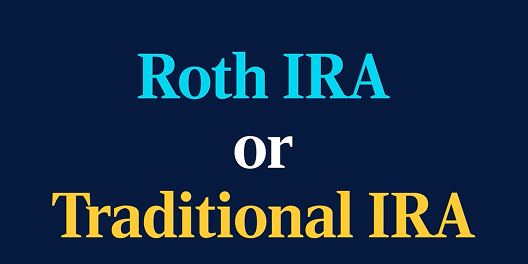
The top things to consider when deciding between Roth and traditional accounts
If you’re in a low tax bracket now and expect to be in a higher bracket later, you may want to consider a Roth.
Subscribe to T. Rowe Price Insights
Receive monthly retirement guidance, financial planning tips, and market updates straight to your inbox.
T. Rowe Price Insights delivered to your inbox
Receive monthly retirement guidance, financial planning tips, and market updates to help you make confident decisions about your finances.
By subscribing, you agree to receive occasional emails about our products and services. The Privacy section of our Help Center has information about how to opt out or update your preferences. This offer is intended for persons in the United States and should not be considered a solicitation or offering or any investment products or services to investors residing outside the United States.
Explore our Retirement Planning Guide

1Generally, withdrawals are tax-free once you reach age 59½ and have held the Roth IRA for at least five years.
Additional Disclosures
Benchmarks are based on a target multiple at retirement age and a savings trajectory over time consistent with that target and the savings rate needed to achieve it. Household income grows at 5% until age 45 and 3% (the assumed inflation rate) thereafter. Investment returns before retirement are 7% before taxes, and savings grow tax-deferred. The person retires at age 65 and begins withdrawing 4% of assets (a rate intended to support steady inflation-adjusted spending over a 30-year retirement). Savings benchmark ranges are based on individuals with current household income approximately between $75,000 and $300,000 and couples with income between $100,000 and $400,000. Target multiples at retirement reflect estimated spending needs in retirement (including a 5% reduction from preretirement levels); Social Security benefits (using the SSA.gov Quick Calculator, assuming claiming at full retirement ages, and the Social Security Administration’s assumed earnings history pattern); state taxes (4% of income, excluding Social Security benefits); and federal taxes. We assume the household starts saving 6% at age 25 and increases the savings rate by 1% annually until reaching the necessary savings rate. Benchmark ranges reflect federal tax rates as of January 1, 2025. Approximate midpoints for age 35 and older are rounded up to a whole number within the range.
Investments in the T. Rowe Price Retirement Advisory Service™ are subject to the risks associated with investing in mutual funds and exchange-traded funds, which may result in loss of principal. T. Rowe Price does not guarantee the results of our investment management, or that the objectives of the funds or portfolios will be met. T. Rowe Price does not provide tax advice. Please consult your tax or financial professional regarding questions specific to your situation.
ETFs are bought and sold at market prices, not net asset value. Investors generally incur the cost of the spread between the prices at which shares are bought and sold and may incur additional transaction costs.
The T. Rowe Price Retirement Advisory Service™ is a nondiscretionary financial planning and retirement income planning service and a discretionary managed account program provided by T. Rowe Price Advisory Services, Inc., a registered investment adviser under the Investment Advisers Act of 1940. Brokerage accounts for the Retirement Advisory Service are provided by T. Rowe Price Investment Services, Inc., member FINRA/SIPC, and are carried by Pershing LLC, a BNY Mellon company, member NYSE/FINRA/SIPC, which acts as a clearing broker for T. Rowe Price Investment Services, Inc. T. Rowe Price Advisory Services, Inc. and T. Rowe Price Investment Services, Inc. are affiliated companies.
202609-5938332