

European High Yield - September
Could Supply Derail Performance in European High Yield Over The Next Few Months?
Events in China led the European high yield bond market to generate negative returns in August. The yuan devaluation caught markets completely off guard and fueled fears that the world’s second-largest economy could be heading for a sharp slowdown. The ripple effects were felt far and wide, with European high yield impacted through the rise in risk aversion. This caused spreads to widen, although to a lesser extent than their U.S. counterpart, which once again suffered more because of its higher exposure to the energy and metals and mining sectors.
On the primary market front, the volatility stemming from escalating China concerns ensured that there was next to nothing in new bond issuance over the month. August is traditionally a low month for new bond supply, but with China concerns lingering how will this influence the pipeline for the rest of 2015?
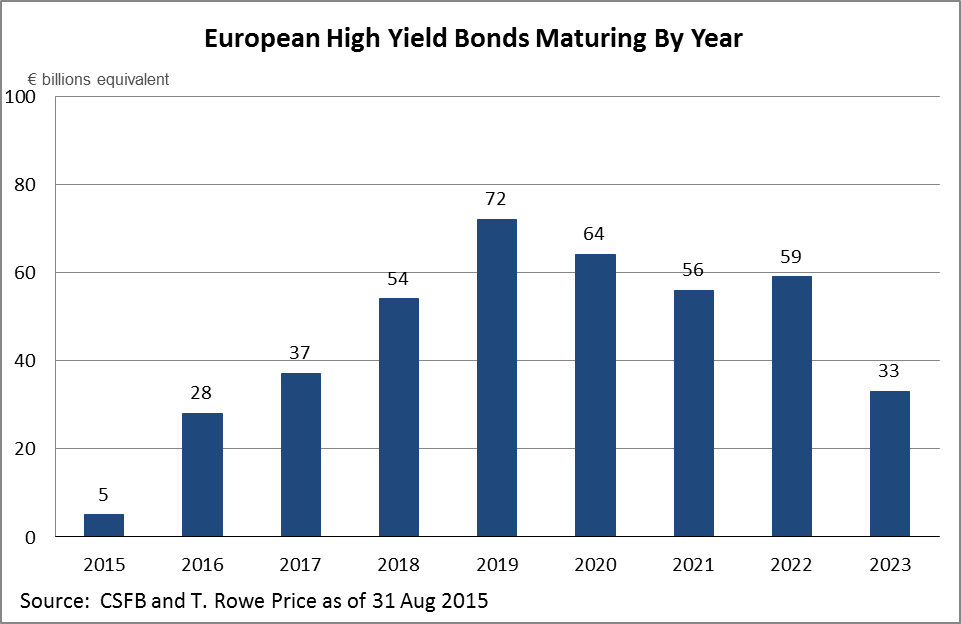
As a starting point, around €5 billion in bonds are set to mature by the end of 2015 (see Figure 1). However, this doesn’t tell the full story as it does not include the potential early refinancing of a number of issues with early call date structures. As overall interest rates remain low by historical standards, we believe this could be the start of a new issuance trend in European high yield where not only maturing bonds get refinanced, but also ones with call structures.
In terms of timing, there are some external risk events that could keep potential borrowers on the sidelines for longer than usual post summer. We have new elections in Greece, and the Federal Reserve meets September 16-17 to decide whether to raise U.S. interest rates for the first time since 2006. Both these events, particularly the latter, have potential to impact risk markets and cause volatility. But once they pass, we would expect the primary market to reopen meaningfully.
When the market eventually comes back to life, it is fair to say that the conditions for issuing will look quite different from what borrowers faced in the first quarter of 2015. The weakness in August means spreads are wider, yields are higher and for the first time since 2012, the average price of a bond is now below par. When combined with solid fundamentals, the European Central Bank’s accommodative monetary policy stance, and continued improvement in the eurozone economy, I feel that the value opportunity in the asset class stands out.
Figure 1
2015-GL-2519
重要情報
当資料は、ティー・ロウ・プライス・アソシエイツ・インクおよびその関係会社が情報提供等の目的で作成したものを、ティー・ロウ・プライス・ジャパン株式会社が翻訳したものであり、特定の運用商品を勧誘するものではありません。また、金融商品取引法に基づく開示書類ではありません。当資料における見解等は資料作成時点のものであり、将来事前の連絡なしに変更されることがあります。当資料はティー・ロウ・プライスの書面による同意のない限り他に転載することはできません。
資料内に記載されている個別銘柄につき、売買を推奨するものでも、将来の価格の上昇または下落を示唆するものでもありません。また、当社ファンド等における保有・非保有および将来の組入れまたは売却を示唆・保証するものでもありません。投資一任契約は、値動きのある有価証券等(外貨建て資産には為替変動リスクもあります)を投資対象としているため、お客様の資産が当初の投資元本を割り込み損失が生じることがあります。
当社の運用戦略では時価資産残高に対し、一定の金額までを区切りとして最高1.265%(消費税10%込み)の逓減的報酬料率を適用いたします。また、運用報酬の他に、組入有価証券の売買委託手数料等の費用も発生しますが、運用内容等によって変動しますので、事前に上限額または合計額を表示できません。詳しくは契約締結前交付書面をご覧ください。
「T. ROWE PRICE, INVEST WITH CONFIDENCE」および大角羊のデザインは、ティー・ロウ・プライス・グループ、インクの商標または登録商標です。
ティー・ロウ・プライス・ジャパン株式会社
金融商品取引業者関東財務局長(金商)第3043号
加入協会:一般社団法人日本投資顧問業協会/一般社団法人投資信託協会
