

Asian Diary - September 2015
Read Nick’s monthly column to get the latest perspectives on what we are seeing on the ground in Asia, with observations from the team’s travels around the region.
Executive Summary
Headlines this month:
- Third quarter proves tough for Asia, underperforming global markets
- Korea and India posts positive market returns, Indonesia suffers most
- On the road: the team visits India’s southern state of Tamil Nadu
- We remain optimistic on India long-term but cautious given the current market’s consensus overweight
That was a tough quarter. The MSCI AC Asia ex Japan Index fell by -16.94% in Q3 2015, underperforming the MSCI AC World Index by -7.60 – the largest quarterly underperformance relative to the global index in over 10 years. Still, ever the optimist, September was a better month. The MSCI AC Asia ex Japan index fell just -1.74% in September compared to -3.58% fall for the MSCI AC World and -2.97% for MSCI Emerging Markets.
Within Asia, Korea (1.76%) and India (0.46%) managed positive returns for the month. Korea was aided by strong performance from the auto sector where weaker FX is being seen as a positive catalyst. India benefitted from a surprise 50bps rate cut by the Reserve Bank of India (RBI) on 29 September, the currency appreciated against the dollar and IT services and Financials were especially strong performers. Indonesia was the weakest market in Asia in September (-13.12%), hindered by a 3.7% depreciation of the rupiah.
Several members of the team were in India in September meeting companies covering a broad range of sectors. There was also a side trip across the large southern Indian state of Tamil Nadu, a follow-up to the trip across northern Indian states earlier in 2015 (see February’s Asian Diary notes). Our broad take-away on the macro situation was that things are slowly moving in the right direction, although without a major pick-up as no major reforms have happened yet. We continue to hear that the private sector is reluctant to invest in infrastructure, and changing this will be important for India’s success over time.
On a more positive note, it is becoming apparent that individual states in India are playing an increasingly important role in development. Road and rail construction is picking up in several states. Our visit to Tamil Nadu confirmed this trend, with some of the best roads to be found in India, even in the villages. The first photo below is a main highway, second is a road through a village with miles of smart tarmac – compare them to the muddy scenes in Uttar Pradesh from our February diary, in the third photo (all photos source T. Rowe Price).

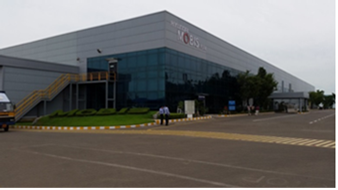
Tamil Nadu is also an example of a state that has encouraged foreign direct investment and improved the ease of doing business. Industrialisation has had a powerful trickle-down effect into the economy. Part of Prime Minister Modi’s ‘Make in India’ campaign is to encourage more states to follow this model. We heard that wages at these factories were growing significantly – not so good for the companies but great for consumption over time. Below is a photo of the Hyundai Mobis factory (source: T. Rowe Price). It is one of their top three global supply centres for auto parts and now sources 70% of its product from local vendors1.
We remain optimistic on the longer term outlook for India. Progress on reform has been slow, but change is happening. Near term, the economy should gradually improve. Our main concern remains that India is a huge consensus overweight. We have not yet seen any improvement in earnings growth, and valuations remain at elevated levels relative to the rest of the region. That makes the market susceptible to disappointment, which tempers our enthusiasm.
1 Company information, Hyundai Mobis
2015-GL-2690
重要情報
当資料は、ティー・ロウ・プライス・アソシエイツ・インクおよびその関係会社が情報提供等の目的で作成したものを、ティー・ロウ・プライス・ジャパン株式会社が翻訳したものであり、特定の運用商品を勧誘するものではありません。また、金融商品取引法に基づく開示書類ではありません。当資料における見解等は資料作成時点のものであり、将来事前の連絡なしに変更されることがあります。当資料はティー・ロウ・プライスの書面による同意のない限り他に転載することはできません。
資料内に記載されている個別銘柄につき、売買を推奨するものでも、将来の価格の上昇または下落を示唆するものでもありません。また、当社ファンド等における保有・非保有および将来の組入れまたは売却を示唆・保証するものでもありません。投資一任契約は、値動きのある有価証券等(外貨建て資産には為替変動リスクもあります)を投資対象としているため、お客様の資産が当初の投資元本を割り込み損失が生じることがあります。
当社の運用戦略では時価資産残高に対し、一定の金額までを区切りとして最高1.265%(消費税10%込み)の逓減的報酬料率を適用いたします。また、運用報酬の他に、組入有価証券の売買委託手数料等の費用も発生しますが、運用内容等によって変動しますので、事前に上限額または合計額を表示できません。詳しくは契約締結前交付書面をご覧ください。
「T. ROWE PRICE, INVEST WITH CONFIDENCE」および大角羊のデザインは、ティー・ロウ・プライス・グループ、インクの商標または登録商標です。
ティー・ロウ・プライス・ジャパン株式会社
金融商品取引業者関東財務局長(金商)第3043号
加入協会:一般社団法人日本投資顧問業協会/一般社団法人投資信託協会
