

Asian Diary - August 2015
Read Nick’s monthly column to get the latest perspectives on what we are seeing on the ground in Asia, with observations from the team’s travels around the region.
Executive Summary
Headlines this month:
- Asia underperforms in August on China policy announcements
- Our base case scenario sees gradual depreciation of RMB over coming months
- Despite recent volatility, we do not believe we are in crisis territory
- On the road: our positive view holds on Indonesian banks
The MSCI AC Asia ex Japan Index followed up its -6.3% return in July with a -9.8% return in August1. The region lagged the MSCI AC World Index by 3% and the broader MSCI Emerging Markets Index by 0.8%1. China’s surprise decision on 11 August to devalue the renminbi (RMB) added to concerns about China’s slowing economy and the impact on global growth. Malaysia (-15.2%2) was the worst performing market in Asia, not helped by a -8.3% decline in the ringgit, as an ongoing political scandal and falling commodity prices weighed on sentiment. Hong Kong (-12.9%), China (-11.7%) and Singapore (-11.6%) also suffered steep falls. Korea (-5.8%), Thailand (-5.8%) and the Philippines (-7.1%) were relative outperformers3. In Korea, won depreciation and a consumption tax cut helped the auto manufacturers outperform.
T. Rowe Price’s culture of global and cross team collaboration was brought into focus again during August by the announcement from the People’s Bank of China (PBoC) regarding a weakening of the RMB. Members of our fixed income trading team in Hong Kong provided detailed feedback from the market throughout the day of the announcement, whilst our sovereign analyst and our equity Financials analyst were quick to provide their perspectives and opinion on the implications of the move. At our daily investment call on the 11th our fixed income team joined their equity colleagues to discuss the potential macroeconomic and stock specific ramifications of a weaker RMB. Whilst recognising the situation as a fluid one, our ability to analyse and digest this information quickly provided our equity team in Asia with a strong platform on which to base decisions in the days that followed.
There is still no clear consensus on exactly what the PBoC was planning when it made its move. Most likely it was due either to a wish to transition to a ‘basket-driven’ FX float, or it was because some factions within the government are concerned about a loss of export competitiveness after the RMB had appreciated versus other key currencies in preceding months. Whatever the motivation, our fixed income team believes that options to manage the direction of the RMB will prove difficult and will likely entail substantial loss of FX reserves. Our base case from here involves a gradual depreciation over coming months, though we must recognise that policy-making in China has become increasingly hard to predict so other options (such as maintaining stability, or just letting the market determine the rate) are also possible.
RMB depreciation is likely to put further downward pressure on regional currencies, especially where those currencies are exposed to end demand in China or where the country is a direct trade competitor. Some parts of Asia, such as India, should be relatively more immune to this trend. This is happening at a time when the market is already worried about the impact of Fed tightening and sluggish global growth on the Asian region. The good news is that currencies have been acting as a shock absorber in the face of capital leaving Asia – this, along with an aggregate current account surplus, low levels of external FX debt and low inflation are the key differences between today and Asia in 1997, pre the Asian financial crisis.
We do not believe we are in crisis territory. We remain optimistic about our ability to find good businesses in Asia trading at increasingly attractive valuations and will look for stock ideas in this environment which should be somewhat immune from currency moves, or which may benefit from a softer currency (exporters, for example) or where we think currency depreciation has led to dollar stock prices over-shooting on the downside.
In travel news, our Commercial Banks analyst visited Medan in North Sumatra, Indonesia, as part of his ongoing due diligence into the health of the Indonesian economy and banking system. At a time when markets were melting down in Asia, the trip served as reminder of some of the positive developments still taking place in the region.
Cranes across the skyline: Medan, Indonesia
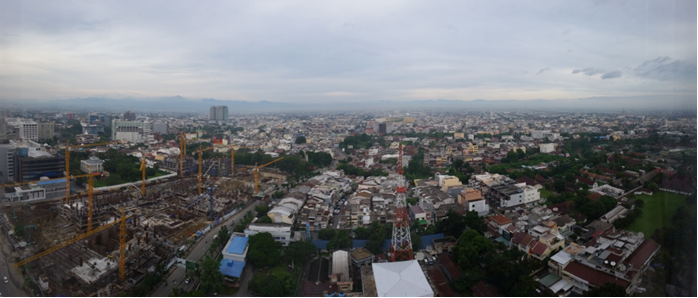
Medan is the 5th largest city in Indonesia with over 4.1m people living in its metropolitan area4. A new airport was built in 2013 and a modern rail link to the city centre that has cut the 90 minute car journey down to just 30 minutes.
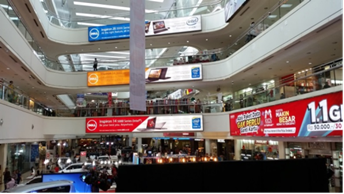
Whilst Indonesian GDP so far this year has been disappointing (below 5%5), activity on the ground in Medan appeared healthy, with shopping malls busy on a weekday.
Plaza Medan Fair Mall, Medan, Indonesia
Overall, the trip reinforced our long term positive view on Indonesian banks with near-term weakness primarily cyclical as the economy has slowed, or driven by asset quality weakness in the coal and rubber sectors.
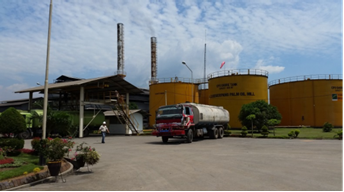
London Sumatra Indonesia CPO mill, Medan, Indonesia
1 Source: MSCI
2 MSCI Malaysia Index in USD. Source: MSCI
3 Source: MSCI. Data is shown for relevant MSCI country index in USD
4 Source: Statistics Indonesia, Indonesian Population Census 2010
5 Source: Statistics Indonesia, data to 30 June 2015
2015-GL-2482
重要情報
当資料は、ティー・ロウ・プライス・アソシエイツ・インクおよびその関係会社が情報提供等の目的で作成したものを、ティー・ロウ・プライス・ジャパン株式会社が翻訳したものであり、特定の運用商品を勧誘するものではありません。また、金融商品取引法に基づく開示書類ではありません。当資料における見解等は資料作成時点のものであり、将来事前の連絡なしに変更されることがあります。当資料はティー・ロウ・プライスの書面による同意のない限り他に転載することはできません。
資料内に記載されている個別銘柄につき、売買を推奨するものでも、将来の価格の上昇または下落を示唆するものでもありません。また、当社ファンド等における保有・非保有および将来の組入れまたは売却を示唆・保証するものでもありません。投資一任契約は、値動きのある有価証券等(外貨建て資産には為替変動リスクもあります)を投資対象としているため、お客様の資産が当初の投資元本を割り込み損失が生じることがあります。
当社の運用戦略では時価資産残高に対し、一定の金額までを区切りとして最高1.265%(消費税10%込み)の逓減的報酬料率を適用いたします。また、運用報酬の他に、組入有価証券の売買委託手数料等の費用も発生しますが、運用内容等によって変動しますので、事前に上限額または合計額を表示できません。詳しくは契約締結前交付書面をご覧ください。
「T. ROWE PRICE, INVEST WITH CONFIDENCE」および大角羊のデザインは、ティー・ロウ・プライス・グループ、インクの商標または登録商標です。
ティー・ロウ・プライス・ジャパン株式会社
金融商品取引業者関東財務局長(金商)第3043号
加入協会:一般社団法人日本投資顧問業協会/一般社団法人投資信託協会
