
Trust-building tech: Using AI the right way
Practice Management
Communication Americans would like less if they knew AI helped create it
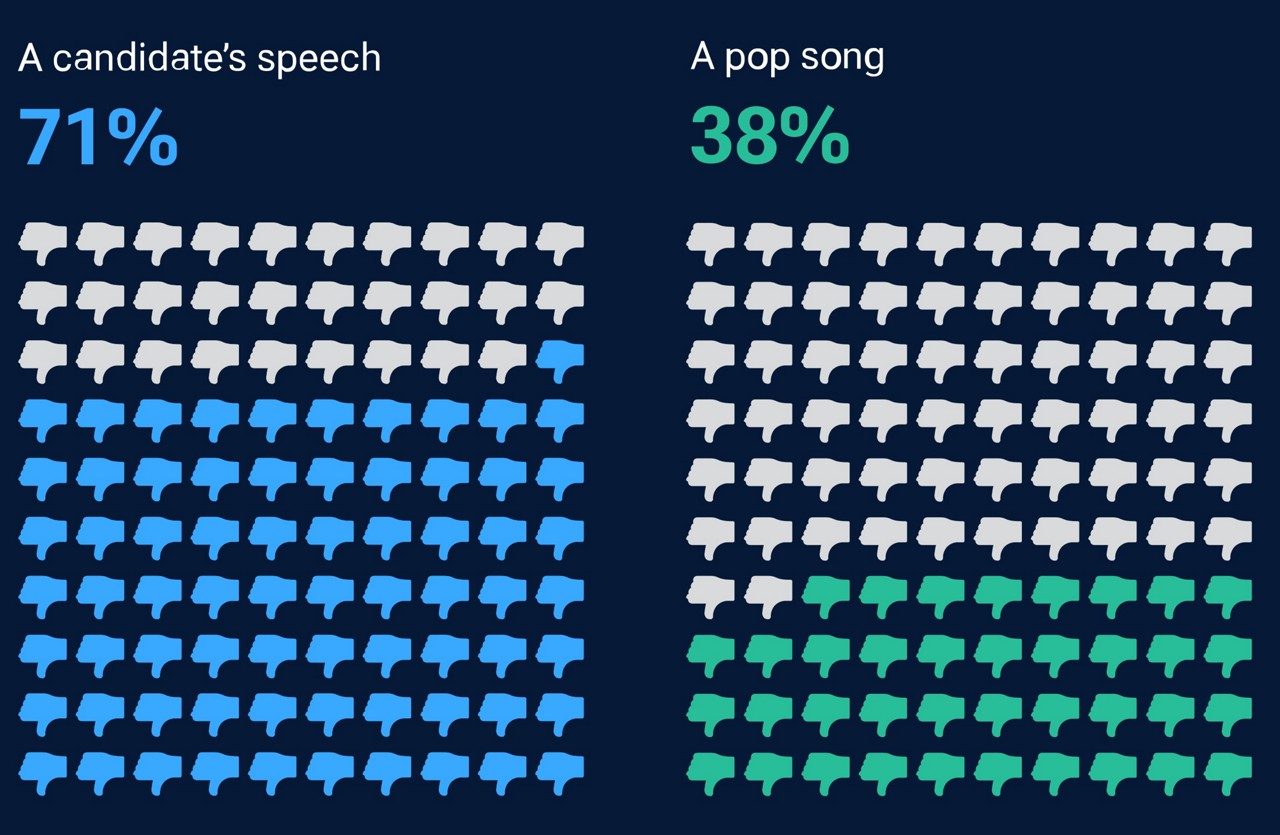
Source: Pew Research Center, Survey of U.S. adults, 2025.
Financial advisors may not be running for office, but they are seeking high approval ratings from clients. And leaning too hard on AI when it comes to drafting client communications, especially on emotional topics, won’t just be met with a roll of the eyes. Research by the New York Institute of Technology has shown that it can trigger “moral disgust” in recipients.1
Transparency and authenticity matter most
It’s easy to regard AI as a kind of productivity fairy, sprinkling scale and efficiency across every aspect of your practice. But advisors seeking to safeguard and strengthen the relationships so foundational to practice health should remember this: AI isn’t just about optimizing for time, but also for impact. And woe to the advisor caught trying to pass off AI-authored messages as bona fide interpersonal communication. Or the advisor whose birthday greeting is revealed to be an auto-generated box-checking exercise.
Because whatever machine-generated messaging may gain you in time can easily be lost in trust and goodwill.
Unchecked automation erodes trust
It doesn’t take much to make a loyal client feel like a stranger. And when it happens, the damage sticks. Behavioral science calls it negativity bias: One impersonal misstep can outweigh years of good service.
In a recent focus group, one participant shared that her husband—who died seven years ago—was still receiving invitations to retirement savings luncheons. Each misaddressed email wasn’t just an error; it was a painful reminder that the relationship wasn’t as personal as she believed.
Details matter. If automation means a client you’ve always called “Bill” is suddenly addressed as “William,” it won’t end the relationship, but it will erode the familiarity you’ve built.
Before you let AI and technology take the wheel, ask: Would this feel personal if I were the client? If the answer is no, rethink. Make sure you’re automating processes, not relationships.
AI client communication do's and don’ts
To remain authentic and true to your brand, it’s important to establish clear ground rules on how and when AI should be utilized in drafting messages to clients and prospects.
AI client communication do’s:
- Keep the tone and personality your clients already know—small imperfections and all.
- Use AI to clean up or tighten what you already wrote, not to replace your voice.
- Be transparent about how AI is used in your practice.
- Have an AI use and oversight policy and stick to it.
- Automate routines, not relationships. Clients likely will not fault advisors for using AI to generate high-volume, service-oriented transactions that don’t touch on emotional topics.
- Use time gained with automation to double down on genuinely personal communications—handwritten notes or phone calls.
AI client communication don’ts:
- Swap a warm, familiar message for something polished, generic, and “too perfect.”
- Send AI-generated messages about emotional or personal milestones (birthdays, congratulations, etc.).
- Imply authorship by putting your signature at the bottom of an AI-generated message.
AI can help advisors work more efficiently and automate routine tasks, but its value ultimately depends on how thoughtfully it is applied. Strong advisor-client relationships will continue to be built on authenticity, transparency, and human judgment. By using AI to support—not replace—personal connection, advisors can capture the benefits of technology while reinforcing the trust that helps drive long-term client loyalty.
- Related Resources
Practice Management Pulse
Explore Practice Management

How to blend AI with emotional intelligence to enhance client relationships
Discover the optimal balance between technological efficiency and human connection, learning when to automate processes and when to prioritize personal touch to strengthen client loyalty

Contact us
1Journal of Business Research, “The AI-authorship effect: Understanding authenticity, moral disgust, and consumer responses to AI-generated marketing communications,” January 2025.
Please consult your firm’s compliance department to confirm which AI tools are permitted for use in accordance with your organization’s policies and guidelines.
- 202606-5485694