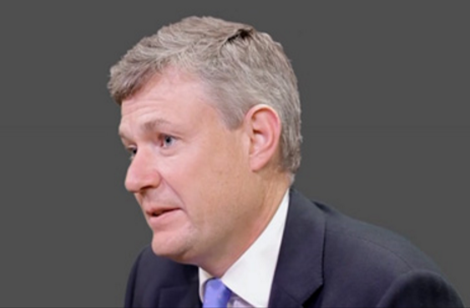
Frontier Markets: Political Developments That Can Unleash Sri Lanka's True Potential
Executive Summary
Sri Lanka has been one of our favored markets within the region. The consumer has been very strong, and credit growth has taken off, partly on the back of significant wage increases and low inflation. Importantly, Sri Lankan politics have played out as expected, and we now have a government that could possibly unleash the country’s great potential.
In this Price Point, Oliver Bell, portfolio manager for T. Rowe Price’s Global Frontier Markets Strategy, discusses what he has seen on the ground after his latest trip to
the region.
POLITICS PLAYING OUT AS WE PREDICTED
As you will recall, the new president, Maithripala Sirisena, was elected in January 2015 and had campaigned on an all-inclusive government, strong anticorruption, and a devolvement of the executive powers of the presidency. Since our last visit, the parliamentary elections took place in August, delivering the hoped-for result of a United National Party (UNP) led coalition. This is potentially very exciting for the country after years of disharmony.
Having implemented some deliberately populist measures ahead of the parliamentary elections to secure victory, we are now waiting for the November budget to confirm that this government is indeed pro-business and market friendly, while also addressing the fiscal deficit by widening the tax net and improving tax collection.
MACRO IN TRANSITION – AWAITING NEW GOVERNMENT POLICIES
A fiscal deficit of around 5% is expected in 2015.1 Most crucial will be the plan to fund and then reduce it in the coming years. If the new government delivers a credible plan and framework for investment in the forthcoming November budget, then Sri Lanka will be on a self-determined economic path that will be relatively insulated from the current global gyrations. In the meantime, there is a real lack of clarity about the form any tax and investment reforms will take, and this information vacuum is causing corporates to be a little circumspect at the present time.
One thing that surprised us on this particular visit was the number of major projects that were frozen by this administration despite reassurances on our last trip that they would not be. The most obvious example is the Port City being built by the Chinese, which still had not progressed since February. The reason given was that the government felt that many of these projects were arbitrarily agreed to under the previous administration without going through the proper protocols (in this case, particularly, the environmental impact study). There is, however, an expectation that all of these projects will be restarted in the coming six months once proper protocol has been carried out.
Meanwhile, in light of the global conditions, China’s currency actions, and with the elections behind us, the central bank made the decision to float the currency, which immediately led to the currency depreciating by around 8% against the U.S. dollar.1 One driver of the pressure on the currency has been the significant pickup in new car purchases, all of which are imported. The significant rise in wages has led to many families buying their first car–generally, a small, inexpensive car from India supported by finance from banks and leasing companies. However, in a preemptive measure to cool demand for credit (and reduce the pressure on the current account), the central bank has just regulated that any loan must now not exceed 70% of the value of any car purchase. This could have material ramifications as we understand companies were extending loans of up to 100% of the value of a new car. This had the potential for a knock-on impact for one of our holdings, so after our meeting with management, we decided to exit our position. We were comfortable with this as the valuation had almost doubled since we purchased it. We still highly rate the management, but on this trip, we had other meetings where the growth outlook was cleaner and clearer.
Related to the currency, there is a debate about the outlook for interest rates. From our meetings, all agree that interest rates are likely to have bottomed out. Inflation is very low, and the central bank wants to encourage growth with loose monetary conditions given the lack of fiscal levers to pump the economy. However, at the same time, they wish to protect their currency, so we may see hikes next year. Additionally, in our meeting with the International Monetary Fund on this trip, they suggested that there was scope for higher interest rates but that this was unlikely in 2015.
CORPORATES LIKE WHAT THEY HEAR FROM THE NEW GOVERNMENT
During each of our company visits, the announced (but not implemented) one-off windfall tax and the overall tax outlook remains an issue, but most companies are resigned to the fact that the government needs to plug the fiscal deficit.
There has simply been no further update by the government on its intentions since our last visit, as they have been consumed with the parliamentary election. So companies remain largely in the dark. Any concern is, however, offset by a real belief that this government will ultimately be pro-business and will set Sri Lanka on a much more positive path. There were also anecdotal comments from many companies that when they engage with this new government, they are on the same wavelength and this government listens and understands issues worrying them.
All the consumer-oriented companies we met with were experiencing very strong growth on the back of the aforementioned wage hikes and low inflation. As a general comment, core, well-penetrated brands are expected to continue to grow 10% in volumes1 for the foreseeable future, with any new products generally experiencing rapid growth. We heard this from all the companies we met across the consumer space, and in relation to personal care, beer, food retail, carbonated soft drinks, and ice cream. While we already had exposure to some of these areas, the changes we made in the portfolio after this trip now give us exposure to all of them.
MANAGEMENT TEAMS CONTINUE TO IMPRESS US
As an indication of the quality of the management teams, John Keells, Sri Lanka’s leading conglomerate company has been working hard in the six months since we last met them to ensure that their major property project, The Waterfront, meets their IRR hurdle. Remember that the incoming government had stripped this project of its casino license, due to election pledges, and management calculated this would halve the IRR. While they expect the government to return their casino license, as a plan B, they have now lined up property funds to take a large stake in the project, which would enable them to make their IRR target even without the casino license.
One of the regular comments we heard on this trip is that Colombo is not a natural tourist destination and that it needs to find its place on the tourist map. Many felt that casinos would be a very good way of doing that and believed that government would ultimately come around to that view too.
Overall, this latest trip reaffirmed our view that Sri Lanka is now on a structural path to growth, and with the new government appearing to be doing all the right things, this should prove beneficial for investors. Sri Lanka remains the second-largest overweight in the Frontier Markets Equity Strategy, primarily due to the number of high-quality growing companies that we continue to find. With an economy that potentially has the ability to self-determine its own path for the next five years, and possibly beyond, this is, in our opinion, a very attractive opportunity.
1 Source: Thomson Reuters Eikon.
2015-GL-2800
重要情報
当資料は、ティー・ロウ・プライス・アソシエイツ・インクおよびその関係会社が情報提供等の目的で作成したものを、ティー・ロウ・プライス・ジャパン株式会社が翻訳したものであり、特定の運用商品を勧誘するものではありません。また、金融商品取引法に基づく開示書類ではありません。当資料における見解等は資料作成時点のものであり、将来事前の連絡なしに変更されることがあります。当資料はティー・ロウ・プライスの書面による同意のない限り他に転載することはできません。
資料内に記載されている個別銘柄につき、売買を推奨するものでも、将来の価格の上昇または下落を示唆するものでもありません。また、当社ファンド等における保有・非保有および将来の組入れまたは売却を示唆・保証するものでもありません。投資一任契約は、値動きのある有価証券等(外貨建て資産には為替変動リスクもあります)を投資対象としているため、お客様の資産が当初の投資元本を割り込み損失が生じることがあります。
当社の運用戦略では時価資産残高に対し、一定の金額までを区切りとして最高1.265%(消費税10%込み)の逓減的報酬料率を適用いたします。また、運用報酬の他に、組入有価証券の売買委託手数料等の費用も発生しますが、運用内容等によって変動しますので、事前に上限額または合計額を表示できません。詳しくは契約締結前交付書面をご覧ください。
「T. ROWE PRICE, INVEST WITH CONFIDENCE」および大角羊のデザインは、ティー・ロウ・プライス・グループ、インクの商標または登録商標です。
ティー・ロウ・プライス・ジャパン株式会社
金融商品取引業者関東財務局長(金商)第3043号
加入協会:一般社団法人日本投資顧問業協会/一般社団法人投資信託協会