

Asian Diary - June 2015
All Asian markets with the exception of Thailand ended with negative returns for the month of June. The overall Index returned -3.6%1, under performing broader EM2 (-2.5%) and the AC World Index3 (-2.3%). Uncertainty about the situation in Greece, an increasing likelihood of Fed lift-off starting in September, and volatility in the Chinese market were the key areas of concern.
In China, the onshore Shanghai Stock Exchange Composite index began the month strongly but declined sharply in the second half4. MSCI China followed suit, ending the month down -5.5%5. The People’s Bank of China implemented a reserve requirement ratio cut and interest rate cut on 27 June, and various measures have followed in an attempt to provide support to the market. We have seen more extreme volatility in China in the first half of July. It remains to be seen whether the recent market declines continue, or whether further measures will be able to support returns a while longer.
Indonesia (-7.2%6) saw the biggest fall in the month as investors remained concerned by the slow pace of investment and the depreciating rupiah. South Korea fell -4.2%7 as an outbreak of MERS (Middle East Respiratory Syndrome) threatened the consumption side of the economy.
In other news over the month, MSCI announced that they had delayed their decision on including China A-shares into their global index series. The announcement followed on from FTSE’s decision in late May that it would start a global series including A-shares. The FTSE Emerging Markets Index is used by some large investors, notably the huge Vanguard ETF. MSCI cited lack of clarity in the QII/RQFII allocation process (mechanisms whereby foreign investors can access the domestic equity markets), capital mobility restrictions and questions around beneficial ownership for separate account assets as the items it will be looking for improvement in before they are prepared to include A-shares. Inclusion could still happen in May 2016, but it is now much more likely to happen in November 2016 or May 2017. Whilst we expressed support for A-share inclusion in our conversations with MSCI, this decision changes nothing for us. At MSCI’s 5% inclusion factor, A-shares will be a very small part of global indices initially (estimated at 1.3% of MSCI EM based on end May 2015 index weights), and will only increase gradually from there over time. Meanwhile, our U.S. Mutual Funds, SICAV vehicles and Australian Unit Trusts can all now invest in A-shares via the Stock connect programme.
Many of our Asian team, as well as several colleagues from Baltimore and London, were in China at the start of the month. They met companies across a wide range of sectors. Feedback from most management teams was quite cautious. They didn't yet see any benefits from the easing that has taken place in China flowing through to the real economy, and some segments of the economy, especially manufacturing, appear to be really struggling.
The team took the opportunity to meet 28 stocks in the internet space. Here strong growth remains much more evident, as rapid smartphone adoption is driving consumers to mobile internet. The space continues to evolve and we noticed a number of themes during our visits including the trend towards providing transaction based services (rather than just information), increasing M&A, and over-heating in parts of the private equity space. The trip served to reinforce conviction in our holdings, which are significant across multiple portfolios at the firm. As a reminder, many internet companies in China are listed as ADRs overseas, mainly in the US. MSCI will begin to incorporate them into MSCI China in two stages in November 2015 and May 2016. These overseas listed Chinese companies will add approximately 3.5% to the weight of China within MSCI EM (based on end May 2015 market cap data).
Elsewhere, Portfolio Manager Eric Moffett and our Asia Financials analyst were on a deep dive tour in Indonesia. They wanted to assess the health of the country outside of the capital Jakarta, so they visited cities in Kalimantan Island and Sumatra. Indonesia is one of the most exciting, long-term emerging market stories, with a population of 250 million, largely young people. But it has been hit fairly hard by the decline in price of some of its key commodity exports – notably coal, palm oil and rubber. The team’s trip focused on areas that were heavily exposed to these commodities. They were able to understand that there is undoubtedly a non-performing loans problem in these regions, people are losing their jobs and investment is being delayed.
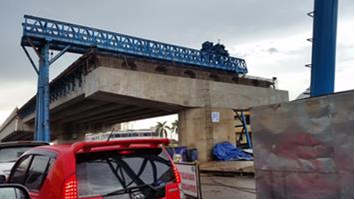
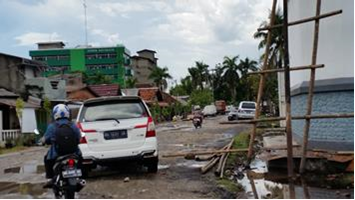
The good news is that the asset quality issues are confined to the lower tier banks, which we have been able to avoid. The higher quality banks avoided lending to many of the problem areas, and we still see them growing their loan books at approximately 20% p.a. in the years ahead. In summary, the team came away from Indonesia believing that economic recovery is still some way off (GDP growth recently dipped to 5%), but that President Joko Widodo and his government still have the potential to turn this around if they force through more investment spending. Still plenty of room for better infrastructure judging by their photos below, which show roads leading to/from Palembang port and, in the last shot, the main access road to the region’s main cement plant. Meanwhile, the local stock market has sold off sharply year to date (-11.7%8), the worst performance of any major Asian market, so a lot of bad news has been priced in near term.

1 MSCI All Country Asia Ex Japan Index in USD
2 MSCI Emerging Markets Index in USD
3 MSCI AC World Index in USD
4 Thomson Reuters
5 MSCI China Index in USD
6 MSCI Indonesia Index in USD
7 MSCI Korea Index in USD
8 MSCI Indonesia Index in USD to 30 Jun 2015
2015-GL-2195
重要情報
当資料は、ティー・ロウ・プライス・アソシエイツ・インクおよびその関係会社が情報提供等の目的で作成したものを、ティー・ロウ・プライス・ジャパン株式会社が翻訳したものであり、特定の運用商品を勧誘するものではありません。また、金融商品取引法に基づく開示書類ではありません。当資料における見解等は資料作成時点のものであり、将来事前の連絡なしに変更されることがあります。当資料はティー・ロウ・プライスの書面による同意のない限り他に転載することはできません。
資料内に記載されている個別銘柄につき、売買を推奨するものでも、将来の価格の上昇または下落を示唆するものでもありません。また、当社ファンド等における保有・非保有および将来の組入れまたは売却を示唆・保証するものでもありません。投資一任契約は、値動きのある有価証券等(外貨建て資産には為替変動リスクもあります)を投資対象としているため、お客様の資産が当初の投資元本を割り込み損失が生じることがあります。
当社の運用戦略では時価資産残高に対し、一定の金額までを区切りとして最高1.265%(消費税10%込み)の逓減的報酬料率を適用いたします。また、運用報酬の他に、組入有価証券の売買委託手数料等の費用も発生しますが、運用内容等によって変動しますので、事前に上限額または合計額を表示できません。詳しくは契約締結前交付書面をご覧ください。
「T. ROWE PRICE, INVEST WITH CONFIDENCE」および大角羊のデザインは、ティー・ロウ・プライス・グループ、インクの商標または登録商標です。
ティー・ロウ・プライス・ジャパン株式会社
金融商品取引業者関東財務局長(金商)第3043号
加入協会:一般社団法人日本投資顧問業協会/一般社団法人投資信託協会
