

Asian Diary - October 2015
Read Nick’s monthly column to get the latest perspectives on what we are seeing on the ground in Asia, with observations from the team’s travels around the region.
Executive Summary
Headlines this month:
- Asia ex Japan equities relay as Fed holds off rate hike
- Countries such as Indonesia which have underperformed recently rebounded strongly
- China’s 5th Plenum generally positive but our outlook remains unchanged
- Philippines: the team reports back from one of the strongest macro stories in Asia
Equities rallied in October after the Fed announced in late September that there would be no immediate rate rise, and as data coming out of China stabilised. The MSCI AC Asia ex Japan index rose 8.0% in USD terms, just outpacing the MSCI AC World Index (7.9%) and MSCI Emerging Markets index (7.1%). All Asia ex Japan currencies, with the exception of the Philippine peso, rose versus the USD.
After a period of extreme outflow across the industry, emerging market / Asia ex Japan strategies saw inflows during the month of October. There was a clear rotation in favour of countries that had recently suffered underperformance. Indonesia was the top performing market (+15.8%) helped by a 7% appreciation of the rupiah. Korea rose +11.3% on better consumption data and strong performance from Samsung Electronics. Meanwhile, China rose +9.1%, as cheap valuations and signs of government support, including a rate cut towards the end of the month, brought investors back to the market. India was the worst performing market in Asia (+1.6%) following its more defensive outperformance in Q3.
In other news, China held its 5th Plenum in late October. The Plenum is attended by the Communist Party Central Committee, a body made up of the party’s top leaders, and sets future policy direction and goals. The announcements were generally positive, though light on detail, so as always execution remains the key risk. Headlines included a re-commitment to the goal of doubling per capita income between 2010 and 2020. That implies an annual growth rate from here of precisely 6.53%, which may prove ambitious. However, with the 100th anniversary of the Chinese Communist Party coming at the end of this 5-year plan in 2021, it is clear that President Xi’s Chinese Dream of transforming the country into a ‘moderately prosperous society’ remains a central goal. Other headlines included the move to a two-child policy, something that is important to China’s future, but unlikely to have much near term impact, as well as a focus on social welfare, the environment, productivity/ innovation and further financial reforms. Nothing here changes our outlook for the Chinese economy.
October was a busy month for travel with team members visiting China, Malaysia, Indonesia, the Philippines and Thailand.
The Philippines remains one of the strongest macro stories in Asia. A combination of overseas foreign worker (OFW) remittances and the business process outsourcing (BPO) industry growing in the high teens1 has led to a virtuous cycle with income growth leading to consumption and property sales, which in turn leads to more private sector investment and employment creation. As well as seeing companies in Manila, some of the team made a visit to the city of Iloilo on Panay Island, several hundred kilometres south of the capital. The visit provided evidence of how the BPO and OFW remittance growth are helping transform provincial economies across the Philippines. At the low end of the scale OFW remittances are allowing low income people access to finance in order to buy entry level homes such as those shown in the Figure 1, which have 30-40 square metres of space and sell for approximately US$25,000. In the mid-end, OFWs such as nurses and seafarers can buy 50-60 square meter units such as those shown in Figure 2 for around US$60,000. We also saw evidence of new shopping malls and business parks being built helping to sustain growth.
Figure 1

Source: T. Rowe Price
Figure 2
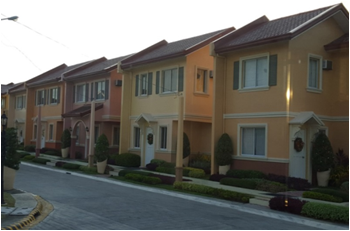
Source: T. Rowe Price
One of the few areas of disappointment has been the pace of infrastructure development in the country in recent years. This was to be a focus of the current government, but a crackdown on corruption and resultant tightening of the regulatory environment has slowed the pace of project approval.
Another risk is the election due in May 2016. It is still too early to know which candidate might win, or to understand their detailed policy proposals, but all of them seem focused on infrastructure, which should be a good thing for the Philippines over the next few years.
Despite this excitement, the Philippines is a small stock market, and as a result trades at high multiples. Our preferred sectors include Financials and the Consumer.
1Information Technology and Business Process Association of the Philippines (IBPAP)
2015-GL-2917
重要情報
当資料は、ティー・ロウ・プライス・アソシエイツ・インクおよびその関係会社が情報提供等の目的で作成したものを、ティー・ロウ・プライス・ジャパン株式会社が翻訳したものであり、特定の運用商品を勧誘するものではありません。また、金融商品取引法に基づく開示書類ではありません。当資料における見解等は資料作成時点のものであり、将来事前の連絡なしに変更されることがあります。当資料はティー・ロウ・プライスの書面による同意のない限り他に転載することはできません。
資料内に記載されている個別銘柄につき、売買を推奨するものでも、将来の価格の上昇または下落を示唆するものでもありません。また、当社ファンド等における保有・非保有および将来の組入れまたは売却を示唆・保証するものでもありません。投資一任契約は、値動きのある有価証券等(外貨建て資産には為替変動リスクもあります)を投資対象としているため、お客様の資産が当初の投資元本を割り込み損失が生じることがあります。
当社の運用戦略では時価資産残高に対し、一定の金額までを区切りとして最高1.265%(消費税10%込み)の逓減的報酬料率を適用いたします。また、運用報酬の他に、組入有価証券の売買委託手数料等の費用も発生しますが、運用内容等によって変動しますので、事前に上限額または合計額を表示できません。詳しくは契約締結前交付書面をご覧ください。
「T. ROWE PRICE, INVEST WITH CONFIDENCE」および大角羊のデザインは、ティー・ロウ・プライス・グループ、インクの商標または登録商標です。
ティー・ロウ・プライス・ジャパン株式会社
金融商品取引業者関東財務局長(金商)第3043号
加入協会:一般社団法人日本投資顧問業協会/一般社団法人投資信託協会
