

Asian Diary - February 2015
Gong Hei Fat Choi! This is the Year of the Yang – which translates as either sheep or goat. An auspicious year for T. Rowe Price in Asia, perhaps?!

The Asian index[i] rose 1.9% in February, but lagged global EM[ii] which returned 3.1% and the strong bounce in developed markets. Oil rallied 22% over the month, tempering the enthusiasm for Asia we saw in January’s returns. The main headlines out of Asia in February concerned monetary easing in China, with a reserve requirement ratio cut at the start of the month (the amount of cash reserves some banks must hold at the central bank) and an interest rate cut at the end. Perhaps unsurprisingly, therefore, energy and materials led sector returns for the region. From a country perspective Taiwan generated the highest return for the month, followed by Malaysia (positive oil correlation) and China (stimulus).
VIETNAM
At the start of the month, several of us from the Asian offices joined Oliver Bell, Portfolio Manager, and his frontier markets team, along with our Asian sovereign analyst, on a two city trip to Vietnam. GDP per capita in Vietnam is low by Asian standards – roughly in line with India and half the level of places like Indonesia or the Philippines - but what strikes the first time visitor is that, in contrast to many cities in these other emerging Asian markets, the basic necessities of life have been taken care of by the communist government. There are no slums, housing is of reasonable quality, and sanitation seems much better than in many parts of Asia. The next thing that strikes you is the traffic – passenger vehicle sales rose nearly 40% YoY in 2014.
Vietnam is emerging from a credit boom and bust of its own making, and the legacy of that is a non performing loan (NPL) problem. Whilst policy is moving slowly to clean it up, none of the banks we met seemed willing to deviate from the official, excessively low estimate of NPLs. That being said, it is also evident that the real estate market in the country is picking up again. The hope is that this will help deleverage the system as many loans were backed by real estate. We met the Deputy Governor of the State Bank of Vietnam and the Deputy Minister of Finance. Both were keen to highlight the government’s greater focus on stability - with inflation targeting and conservative credit growth. You get the sense that if they could clean up the NPLs and loosen the controls on credit growth, the economy would have the potential to grow well ahead of the 6% expected over the next couple of years. Foreign direct investment into Vietnam was another growth driver frequently mentioned during our meetings. Vietnam has been a beneficiary of the trend for incremental manufacturing capex to move out of China. The oft-cited example is Samsung Electronics, which has spent billions of dollars in Vietnam in recent years, attracted by government incentives, and now ships 40% of its mobile handsets from the country.
Consumption has been the main area of disappointment as a growth driver recently. Longer term, with a very young population of 90m people, consumer-oriented companies have the potential to be one of the more attractive areas of the stock market. We met with several real estate developers and pharmaceutical companies, which are all interesting plays on this theme. For equity investors, the key problem in Vietnam is a lack of available stock. Most of the attractive plays are at, or close to, their foreign ownership limits so it is incredibly hard to source liquidity in the more favoured stocks. The Ministry of Finance was keen to highlight their intention to speed up the state owned enterprise IPO and privatisation process. They also intend to raise the foreign ownership limits across a range of sectors. Such moves would be very welcome and would certainly encourage more foreign participation.
INDIA
Later in the month, our Financials team spent a few days off the beaten track visiting villages in rural Northern India. In Uttar Pradesh and Rajasthan, where the team travelled, the rural population is still 63-66% of total population. Paved roads and clean water are lacking. Electricity might only be available for 8 hours a day. Some typical scenes from their trip…
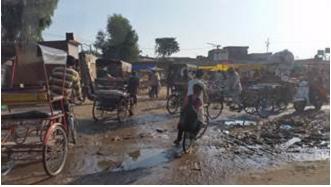

As well as seeing the problems faced by people on the ground in rural India, the purpose of the trip was to better understand the state of rural banking, which is a key initiative for many of the private sector banks that we own there.
Rural India enjoyed strong consumption growth under the previous government, with farmers supported by schemes to guarantee minimum support prices for produce during the 6-9 months crop season, and the National Rural Employment Guarantee Act which provided a guarantee of 100 days’ work at $2.50/day during the off-season. Multiple layers of bureaucracy and parochial local politicians have caused these systems to be abused, however, and corruption is rife. Feedback from people the team spoke with on the tour suggested that things are getting tougher under the new Modi government. There is scepticism, however, on the ground about how much real change Modi’s reforms will be able to make to lives of rural Indians in the near term.
As for the banks themselves, this is the type of bank the team found in villages in rural India…
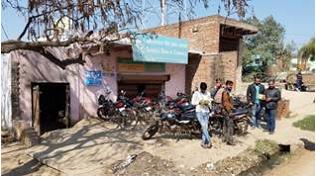
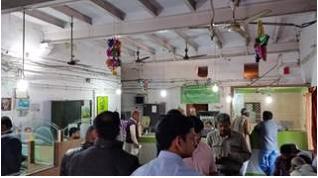
The bad news the team discovered is that rural bank branches are giving low income farmers with low financial literacy easy access to money, creating poor, indebted people without the means to pay off their loans. From an investment perspective, however, it’s only really the public sector banks participating in this segment. The private sector banks where we invest have more stringent underwriting standards, while they also tend to be located in small cities, or the suburbs, and far less in village outposts.
So, the overall conclusion from the trip is that rural India may be in a tougher place than over the last few years. This will have little impact on overall GDP growth however, as agriculture is just 15% of GDP. The private banks are well positioned in India. In rural areas they are focused on growing deposits rather than lending, but elsewhere loan growth to retail and corporate remains solid in an improving economic environment.
2015-GL-2034
重要情報
当資料は、ティー・ロウ・プライス・アソシエイツ・インクおよびその関係会社が情報提供等の目的で作成したものを、ティー・ロウ・プライス・ジャパン株式会社が翻訳したものであり、特定の運用商品を勧誘するものではありません。また、金融商品取引法に基づく開示書類ではありません。当資料における見解等は資料作成時点のものであり、将来事前の連絡なしに変更されることがあります。当資料はティー・ロウ・プライスの書面による同意のない限り他に転載することはできません。
資料内に記載されている個別銘柄につき、売買を推奨するものでも、将来の価格の上昇または下落を示唆するものでもありません。また、当社ファンド等における保有・非保有および将来の組入れまたは売却を示唆・保証するものでもありません。投資一任契約は、値動きのある有価証券等(外貨建て資産には為替変動リスクもあります)を投資対象としているため、お客様の資産が当初の投資元本を割り込み損失が生じることがあります。
当社の運用戦略では時価資産残高に対し、一定の金額までを区切りとして最高1.265%(消費税10%込み)の逓減的報酬料率を適用いたします。また、運用報酬の他に、組入有価証券の売買委託手数料等の費用も発生しますが、運用内容等によって変動しますので、事前に上限額または合計額を表示できません。詳しくは契約締結前交付書面をご覧ください。
「T. ROWE PRICE, INVEST WITH CONFIDENCE」および大角羊のデザインは、ティー・ロウ・プライス・グループ、インクの商標または登録商標です。
ティー・ロウ・プライス・ジャパン株式会社
金融商品取引業者関東財務局長(金商)第3043号
加入協会:一般社団法人日本投資顧問業協会/一般社団法人投資信託協会
