

 Impact Investing Education Hub
Impact Investing Explained
Impact strategies are investments made with the intention to generate positive, measurable, environmental or social impact alongside a financial return.
We believe impact investing offers a real opportunity to target stocks that can help delivery positive impact and at the same time pursue excess return potential.
Explore our resources to help you understand impact investing.
- Introduction to Impact Investing
- Better Client Conversations
- Adviser Resources
- How T. Rowe Price think about Impact
Introduction to Impact Investing
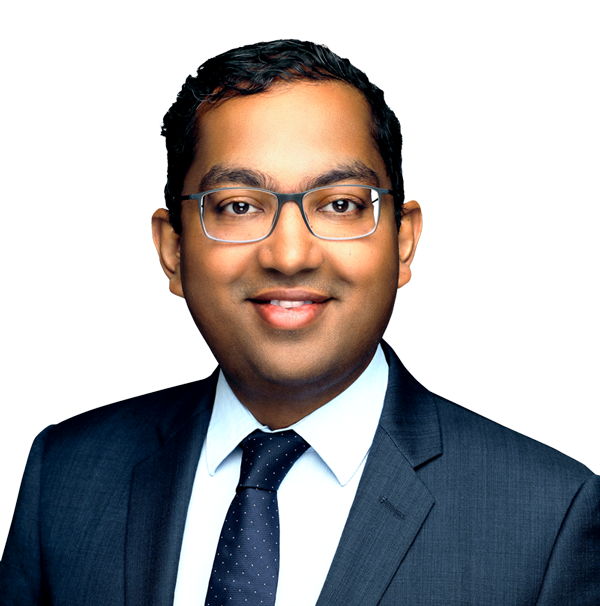
Watch the Impact investing Q&A video series with Hari Balkrishna, Portfolio Manager, as he unpacks what impact investing means, how it's measured, and why it matters now more than ever.
Click on the topics to find out more.
1. What is impact investing?
What is impact investing?
Hari Balkrishna
To us, impact investing is about embracing ESG as an opportunity, and not just looking at it as a risk.
The companies that we're looking for are the companies that are delivering positive environmental and social impact, as well as a positive financial return.
We are at a point in public equity markets where we can access a lot of these opportunities now, where there are companies, so their business models are doing exactly that.
It's really important because, ultimately, when we think about impact investing, these are companies that are on the right side of change from a consumer preference standpoint, regulatory preference, and an industrial preference standpoint.
2. Impact investing in listed equity markets
Impact investing in listed equity markets
Hari Balkrishna
We're really excited about partnering with our clients in delivering impact and financial performance, because ultimately our view is in this really complex world of investing, and in this really complex world of these environmental and social problems we're trying to solve for.
s asset managers, we can make a huge difference in helping our clients direct their capital towards those investments that are delivering positive environmental and social impact.
But equally, those are the investments that, we believe, are on the right side of change from an investment perspective, and can deliver positive financial returns for our clients as well. So that partnership aspect is really important, and I bring up the complexity because a big part of the excitement here as well is partnering with clients, being transparent about our impact investments, having that dialogue, and making us as an investment industry better in terms of channeling capital towards the positive actors.
And we can use tools like proxy voting, like active engagement, strategic dialogue with companies as well, where we can use our scale to really make the best use of our clients' capital to deliver the positive impact and the positive financial performance.
3. How and why do you measure impact
How and why do you measure impact
Hari Balkrishna
We measure impact across two dimensions.
Firstly, when an impact investment goes into our portfolios, we're ex-ante trying to measure what key performance indicators we're going to hold these investments to.
We use the five dimensions of impact framework, so we identify what the strategic goal of the impact is, who is getting affected, what the scale and the depth of the impact is and what the impact risk is. And that's being done for every stock that goes into the impact portfolios.
The other aspect of this impact measurement is the ex-post measurement, and we use the theory of change framework to identify, looking back against our key performance indicators, what was the impact that was actually delivered. So for instance, you take a renewable energy company. Our KPI might be what are going to be the megawatt hours of renewable energy generated by this company. And the ex-post measurement will actually measure what that company really did against what, we expected it to do.
It's really important to measure impact in our view, because when we’re investing in these companies with the intentionality of impact, we want to actually assess these companies at a later stage to see if they've actually delivered the impact that we think they're going to deliver.
In many ways, impact investing and measurement are very similar to financial Investing and measurement. Just like you've got a thesis on a stock and you hold the stock to that investment thesis. On the impact side, it's exactly the same, you have an impact thesis, an impact intentionality and you hold the stock to those KPIs.
4. What philosophy do you apply to impact investing
What philosophy do you apply to impact investing
Hari Balkrishna
We're focused on investing and impact across 4 criteria. Every investment has to meet those 4 criteria. We start with materiality, so every investment has to be delivering impact that is material to its business model, and we use revenues or profits as a proxy measure for that materiality.
The second aspect is measurability, so measurability both ex-ante when we look at the revenues and profits, but importantly ex-post as well. Taking a look back on the companies and what impact they've actually delivered and measuring that.
The third aspect is additionality. As a public equity manager, we want to be making a difference to the impact that's actually being delivered through our involvement.
And the final point is resilience. Every impact investment needs to be resilient from a financial perspective. When we take a prospective view on industry structures or business modes, economic returns have to either be expanding or preserved. If it's a renewable energy company, it’s got to have better top line or better bottom line prospects in the market when we're investing in those, for instance.
5. Hari, why are you passionate about impact investing
Hari, why are you passionate about impact investing
Hari Balkrishna
The reason I'm really passionate about impact investing is my background has really informed this decision for us to launch this product. When I think about my background, I lived and worked in five different continents, I was born and raised in India, lived in Latin America for a while, spent time in Australia, the U.S., and Europe for the last 11 years. That's really given me an appreciation for different social constructs around the world, what works, what doesn't and a real appreciation for all the issues that that are sort of ahead of us as a society to solve for.
From an inequality perspective, in terms of access to opportunity, access to credit, access to bringing the best out of everyone really in this world.
And then on the climate side, I've always had a personal passion for solving for climate change. And I do believe we're at this point now as an investment industry where we finally have these amazing investment opportunities that are not just delivering the financial performance, but can actually solve for climate change through technological innovation, through their focus on their business models and what they're doing for energy efficiency or decarbonisation. And being able to sort of put those two together in products that can actually deliver positive impact and positive financial performance, for me, is a dream job.

Better client conversations around impact and responsible investing
In this Education Series, Alexandra Brown, Founder and CEO of Ethical Invest Group and Hari Balkrishna, Portfolio Manager, share important tips and insights for having better client conversations around impact and responsible investing.
1. The importance of public markets for impact investing
The importance of public markets for impact investing
Heath Branigan
When you talked about Sustainable Development Goals, I couldn't help but think about the conversations that we've had, Hari, with regards to achieving those and the importance of both public and private market capital going towards delivering on these SDGs.
Can you talk about that public-private debate , and how importnat the public capital is going to be to achieving it?
Hari Balkrishna
I think it's absolutely critical, Heath, when we think about the role that public equity capital needs to play in delivering on the 17 Sustainable Development Goals.
So the UN estimates nearly a 5 trillion US dollar funding gap to actually achieve those goals.
And my view is you can't necessarily get there just through philanthropy and private markets. And so the involvement of the large listed equity sector is absolutely critical.
But there's a few sort of qualifications there. So when we think about how we actually get there, it's one thing to just passively provide that capital. It's another thing to use our capital to make a difference towards delivering those sustainable development goals. And what do I mean by that?
The first thing is active engagement. As an impact investment manager, I'm focused on finding stocks that deliver positive environmental and social impact alongside a financial return. In all the cases, in my view, the positive impact thesis is what drives really exciting alpha potential in those stocks as well.
But it doesn't stop there. Once we want to make an investment, we think really hard about our additionality. It is about how can we improve the impact delivered through our involvement. And so engagement with C-suite executives, boards of directors, operational management, absolutely critical. We're blessed that we have 1.3 trillion US dollars, nearly 2 trillion Aussie dollars of assets under management. So that gives us that seat at the table.
And then when you think about public vs private, a few other considerations think about as an adviser or as an end client, the ability to actually achieve impact through a listed liquid alternative, compared to an illiquid alternative, I think has some risk implications in terms of portfolio construction.
And then the other thing that I'd say as well is it's really possible if we were to engage with a company and drive impact, it's really possible to achieve impact at a very large scale very quickly.
To give you an example, one of our portfolio holdings, Linde, which is in the industrial gasses space, they mitigate 88 million metric tons of CO2 equivalent every year for their customers*. But we're able to get a seat at the table with their board, with their C-suite to talk about how they can be even more ambitious in mitigating more and more CO2, or mitigating their own carbon footprint.
All issues which, if fulfilled, satisfied, and if we're successful, can achieve that impact at a massive multiplier effect compared to illiquid privates.
*Source: Linde's 2021 Sustainable Development Report.
2. Having better impact client conversations with Alexandra Brown
3. How to have a valuable discovery meeting with clients
4. How Trane is helping meet renewable energy needs
5. Two impact healthcare companies changing the game
RIAA adviser resources
The Responsible Investment Association Australasia (RIAA) champions responsible investing and a sustainable financial system in Australia and New Zealand.
RIAA has created these tools for advisers to better understand and navigate their clients towards responsible investment products and advice.
Financial Adviser Guide to Responsible Investment
This guide sets out to demystify responsible and ethical investment.
Adviser Guide: Client Interview Process
This guide aims to provide you with a step by step process you can use as the basis for crafting your own client interview process.
Responsible Investment Fact Find
This tool is designed for clients to share with financial advisers the environmental and social themes and issues that matter to them.
How we think about impact

Material
Every stock is aligned with clearly defined impact pillars, using a forward-looking perspective.

Measureable
Our approach is multi-dimensional and stock-based, using insights from our research platform and company engagements.

Additional
We commit to using our scale and resources to promote and progress the impact agenda.

Resilient
In an era of disruption and extreme outcomes, patience and skillful portfolio construction is important.
T. Rowe Price Global Impact Equity Fund
The T. Rowe Price Global Impact Equity Fund targets specific companies that not only make good economic sense, but also strive to make the world a better place for all.
It’s really about pursuing more meaningful returns for investors who care.
Important Information
Equity Trustees Limited (“Equity Trustees”) (ABN: 46 004 031 298, AFSL: 240975), is the Responsible Entity for the T. Rowe Price Australian Unit Trusts ("the Fund"). Equity Trustees is a subsidiary of EQT Holdings Limited (ABN: 22 607 797 615), a publicly listed company on the Australian Securities Exchange (ASX:EQT).
This material has been prepared by T. Rowe Price Australia Limited ("TRPAU") (ABN: 13 620 668 895, AFSL: 503741) to provide you with general information only. In preparing this information, we did not take into account the investment objectives, financial situation or particular needs of any particular person. It is not intended to take the place of professional advice and you should not take action on specific issues in reliance on this information. Neither TRPAU, Equity Trustees nor any of its related parties, their employees or directors, provide and warranty of accuracy or reliability in relation to such information or accepts any liability to any person who relies on it.
Past performance is not a guarantee or a reliable indicator of future results. You should obtain a copy of the Product Disclosure Statement, which is available from Equity Trustees (www.eqt.com.au/insto) or TRPAU (www.troweprice.com.au/investor), before making a decision about whether to invest in the Fund named in this material.
The Fund’s Target Market Determination is available here www.eqt.com.au/trprice. It describes who this financial product is likely to be appropriate for (i.e. the target market), and any conditions around how the product can be distributed to investors. It also describes the events or circumstances where the Target Market Determination for this financial product may need to be reviewed.
Information and opinions presented have been obtained or derived from sources believed to be reliable and current; however, we cannot guarantee the sources' accuracy or completeness. There is no guarantee that any forecasts made will come to pass. The views contained herein are as of the date noted on the material and are subject to change without notice; these views may differ from those of other T. Rowe Price group companies and/or associates. Under no circumstances should the material, in whole or in part, be copied or redistributed without consent from T. Rowe Price.
202512-5075095