


We're on Bubble-watch. Stay active.
We're closely monitoring market indicators for risks and opportunities to support client portfolios.
Markets are exhibiting clear bubble-like behaviour, particularly in select AI-linked valuations and capital flows, rising leverage, elevated expectations, and increasingly concentrated market leadership.
As active managers, we are balancing that fundamental opportunity against a more crowded, leveraged, and liquidity-sensitive market. We remain meaningfully invested, particularly in AI infrastructure and its physical bottlenecks, but are focusing on businesses with visible earnings and reasonable valuations while avoiding the most speculative parts of the market.
Our bubble-watch framework combined with our global research platform helps us size risk, refine exposures, and actively adjust portfolio positioning as the evidence changes.
We continue to focus on what has delivered for clients through market cycles: staying actively invested through a disciplined and selective investment approach. Helping them reach their investment goals through consistent, risk-aware compounding rather than chasing the market's most speculative opportunities.
October 2026
The two forces shaping global markets
In this video Sam Ruiz, Portfolio Specialist highlights the following key points.
- The economic backdrop remains resilient, with the US economy and labour market holding up despite higher rates, inflation and geopolitical uncertainty.
- AI investment still has significant runway, with rising demand for compute, data centres and energy infrastructure supporting continued spending.
- The earnings story is broadening, with positive momentum increasingly extending beyond technology and AI into the wider market.
So let's focus then on what we're seeing on Wall Street at the moment.
Joining us, Sam Ruiz from T Rowe Price.
Sam, welcome back to you.
Great to get across a monthly Rab.
In fact, we take the opportunity, I guess, take a look back at that quarter just gone and how would you sum this up?
So we're seeing rates across the globe move higher, central banks trying to cut off inflation, those Treasury yields, as I mentioned, moving higher.
At the same time, still no resolution to the war and the AI trade seems to run out of steam.
Yeah, I mean, good morning, Andrew.
That is I think the tension in markets right now because if you sum everything up that you just said, that's kind of concerning because interest rates historically have been the gravity of markets and asset prices globally.
And we have this unresolved war, which is one of the key reasons why interest rates are moving where they are.
And the problem is the interest rates can't really fix that.
They can maybe slow some spending, which is too hot in some parts of the world, but they can't go in and resolve the pressure on getting oil out of a critical supply point.
So that feels bad.
What I just say is the underlying economic health is still actually very resilient and healthy.
And we are seeing, particularly in developed economies and the US is the main 1 upgrades to economic growth and a very healthy labour market backdrop.
So I think there's a bit of repositioning on the yield curve around just that stickier inflation, the Fed trying to get ahead of that becoming an entrenched problem.
But under the covers, we're actually still broadly optimistic, which feels a little contrarian.
And against that summary that you gave, when you look at the US economy has remained resilient, in particular the US consumer despite those rising inflationary pressures, how important has that been?
That has been very important.
I mean, I think one of the thing that's really driving the US economy in terms of the strength is actually AI spending and the investment around that.
And we actually had Bullock from the RBA call that out even locally in Australia.
When we think about the USS problem though is the transmission mechanism for interest rates is not the same as our variable interest rate structure here in Australia.
So with those 30 year mortgages that they have there, what that basically does is it forces people to stay in their existing homes and it means that their spending is actually improving or their ability to spend.
Because if you have wage growth on the back of inflation, but your mortgage interest rates aren't going up, it's actually real income growth.
So that's not bad for all consumers and it's why I think it's been quite resilient despite what they're seeing at the petrol pump, correct.
Yeah, I mean the petrol pump, we're seeing it here as well is a big problem.
And I think that that's going to become a bit more political with the mid midterms coming up now as well.
That is, that is something that doesn't just feed through to the consumer at the Bowser or the petrol pump.
It feeds through the consumer because it rolls through freight, it rolls through the industrial supply chain, and it flows through a lot of those sort of commodity prices beyond just energy.
So Sam, you talk about these two forces colliding, you've got that AI growth and then you've got the pressures from energy prices.
Yeah.
So I think the energy prices are a problem.
Just very quickly on that.
We had our team in China 2 weeks ago and we think that what we expected to be China's peak oil consumption in 2030 has already peaked last year.
So that means that demand for globally has actually stepped back earlier than we would have thought.
And we're actually starting to see more inventory and supply come out of the Middle East.
So if we can recalibrate to pre war levels on oil, that's actually quite good, could help inflation as well.
On the AI side, spending we think is going to stay much hotter than a lot of people fear at the moment.
And there was a really interesting development that came out.
You might have seen it in the last three or four weeks.
Meta, who obviously owns Instagram and Facebook, launched their first personal agent called Muse.
Now, Muse is not actually available in Australia yet.
They're restricting it just to the US consumer.
But downloads of Muse have actually outpaced downloads of ChatGPT when it was first launched in the first few weeks.
What does it do?
It brings this thing called an agent or a gentic AI to the average consumer.
And basically you can give it access to all the apps on your phone and autonomously run your life for you, reply to emails, manage your calendar, even go to your bank and financial service providers and renegotiate lower rates.
Yeah. I mean, they're building it essentially as the ultimate life tool, aren't they?
Correct.
And we had open AI actually bring out their version in the last 24 hours.
I think theirs is called Dots.
Why does this matter?
This isn't just hype around a great new tool we all have.
You know, we were all excited that ChatGPT could write us a card or a poem initially.
Now these are autonomous assistants that are virtually free that can go on manage a whole bunch of things in your lives.
When we use these tools effectively, the companies that provide them to us are giving each of us a virtual computer to run our agent.
That means that the infrastructure and hardware demand behind running this is going to move to another level than what we even thought AI needed.
Which means we think that the demand for compute, which is the capacity of AI and all the hardware and infrastructure and data centres that actually power that compute is going to be increasing from here.
And the companies will just continue to spend this level of what was free cash flow, what is now going to turn more into debt, which is further supporting the AI trade on the hardware side.
OK, So deploying more capital, raise more debts, greater draw on energy infrastructure, Correct.
Yeah.
And there is, there is greater draw on existing grids.
What what is might surprise some people is the energy cost to power all these data centers is actually not, you know, too bad in terms of their margins, which means that they're doing something which is called behind the meter.
They're bringing their own energy.
So they're actually even repurposing old airplane engines and making their own gas turbines, waiting for the grid to effectively catch up here.
It's going to mean a lot more demand for all of that.
The monetization we think is going to be that be there for them.
But why we think that this is going to just continue and continue continue is it's now actually becoming an existential threat that if one of these big AI companies chooses not to go down, say, the agent path, then their business risks being heavily disrupted by the other.
And I'll give you a great example of that.
One of Google's great competitive boats is they get a lot of consumer data from you using all the different Gmail tools, for example, and they can actually scrape data on the consumer from that.
Now all of a sudden, Meta has this tool called Muse that you can give access to Gmail, which Meta never had access to, which is going to give them a way bigger profile of you as a consumer, which means their business that relies on advertising now has a massive advantage to pull better advertised targeting away from, say, YouTube towards Meta.
If you're Google, you can't afford not to fight this race.
Otherwise, Meta starts to play in your sandpit.
Yeah, as we all know, your online data profile is gold for these companies.
Yet, Sam, as we all know, there's been a lot of conversation over the past month about just how rapidly this technology is evolving to the point where a lot of these developers say we need to put the brakes on it.
Yeah, Donald Trump's saying no way we're not doing that because this just gives a free ride to China.
How realistic is that?
Is it just talk or are we seeing a bit of hesitation there?
I think, I think there's a lot of debate here and I, I've got no idea because some people start to say some of the CE OS are talking in their own book and some of the concerns they have actually play into more usage for their own tools.
What I think is going to be hard here is the cats out the bag with AI.
Clearly it's now become a military imperative and there's no way the US wants to slow that spending when some of their other countries might be building faster if they start to slow things down.
Another, another thing that I think means you can't stop investing in this is the open weight models, which have a lag to the frontier models and effectively are almost free, are catching up to the point where they are going to be so good that the wave of threats that those open weight models are going to pose bad actors.
Now being able to use tools that they weren't allowed to use before, whether it be cyber attacks and other things, means that the investment from a defense perspective is just a necessity.
So I think you asked the question, what could that mean for the frontier models and maybe clawed or ChatGPT having to slow things down.
I think that's a bit of a harder question.
All of it though, means we just need more AI.
If it's not offense, it's for defensive reasons.
And the investment behind spending to build the capacity for all of that is just going to be in a sweet spot for longer in our view.
All right.
So overall, I guess particularly the focus on those tech stocks, what are you seeing in terms of earnings growth going forward, particularly for this quarter?
Earnings growth this quarter, we think is going to be strong.
We'll already have above average 2 times average levels of earnings growth, particularly on the SNP coming for this year.
Even for global stocks, we think that the appetite here or just the capacity of token consumption, so companies continuing to use AI that the big cloud providers are providing and the frontier models are providing is going to remain strong.
And that just we think really provides a support under that tech ecosystem, which has been a driver of earnings growth for the broader market.
The other thing is that we're actually seeing breadth start to improve.
So a much larger majority of the broader market is starting to participate to increasing upgrades and revisions.
So that's healthy signal that it's, it's something that was a bit more AI dominated before that's broadening out that that is a that is a healthy signal, which means we can start to rely on more pockets of the economy.
 September 2026
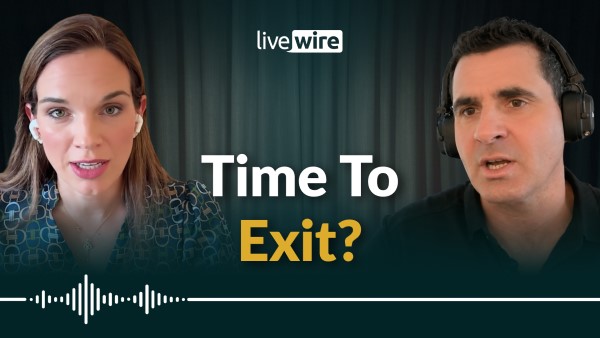
Why it’s not time to leave the equities party yet
In this video Iona Dent, Associate Portfolio Manager breaks down the following key points.
- Equity earnings remain a powerful support, with strong economic growth and earnings upgrades helping offset pressure from higher interest rates.
- There are signs of market froth, particularly around AI, but valuations and balance sheets remain healthier than during the dot-com bubble.
- Stay invested, but know the exits. T. Rowe Price’s five-part ‘bubble watch’ framework helps identify risks systematically as the bull market matures.
Bubble watch framework1
Click on the five dimensions below for our latest views
Five market dimensions to assess current equity market conditions and identify whether we're experiencing sustainable growth or potential overvaluation.

Explore the Global Equity Fund
Learn more about our investment approach, performance history, and how the fund is positioned to navigate market concentration while capturing opportunities acroos global equities.

Have questions?
Speak to your relationship manager for more information about managing concentration risk.
1 All data as of June 30, 2026.
Important Information
Available in Australia for Wholesale Clients only. Not for further distribution.
Equity Trustees Limited (“Equity Trustees”) (ABN: 46 004 031 298, AFSL: 240975), is the Responsible Entity for the T. Rowe Price Australian Unit Trusts ("the Fund"). Equity Trustees is a subsidiary of EQT Holdings Limited (ABN: 22 607 797 615), a publicly listed company on the Australian Securities Exchange (ASX: EQT).
This material has been prepared by T. Rowe Price Australia Limited ("TRPAU") (ABN: 13 620 668 895, AFSL: 503741) to provide you with general information only. In preparing this information, we did not take into account the investment objectives, financial situation or particular needs of any particular person. It is not intended to take the place of professional advice and you should not take action on specific issues in reliance on this information. Neither TRPAU, Equity Trustees nor any of its related parties, their employees or directors, provide and warranty of accuracy or reliability in relation to such information or accepts any liability to any person who relies on it.
Past performance is not a guarantee or a reliable indicator of future results. You should obtain a copy of the Product Disclosure Statement, which is available from Equity Trustees (http://www.eqt.com.au/insto) or TRPAU (http://www.troweprice.com.au), before making a decision about whether to invest in the Fund named in this material.
The Fund’s Target Market Determination is available here (http://www.eqt.com.au/trprice). It describes who this financial product is likely to be appropriate for (i.e. the target market), and any conditions around how the product can be distributed to investors. It also describes the events or circumstances where the Target Market Determination for this financial product may need to be reviewed.
202608-5991959