

Choose your location
Germany
English
Belgium
Denmark
Estonia
Finland
France
Iceland
Ireland
Latvia
Lithuania
Luxembourg
Netherlands
Norway
Portugal
Sweden
United Kingdom
 November 2025, In the Spotlight
The Long View: Interview with Dave Ricks, Chair and CEO, Eli Lilly
Overview
In these special episodes of “The Angle from T. Rowe Price,” Eric Veiel, head of Global Investments and chief investment officer at T. Rowe Price Associates, welcomes CEOs and industry leaders to share their personal stories, leadership strategies, and lessons learned from running successful companies. Listen as we pull back the curtain on what it truly takes to lead a company in today’s fast-paced and ever-changing business landscape.
In this episode, Dave Ricks, Chair and CEO of Eli Lilly, shares his insights on the company’s major advancements in diabetes, obesity, and Alzheimer’s treatments, global drug access, manufacturing scale, and the role of innovation and AI in health care.
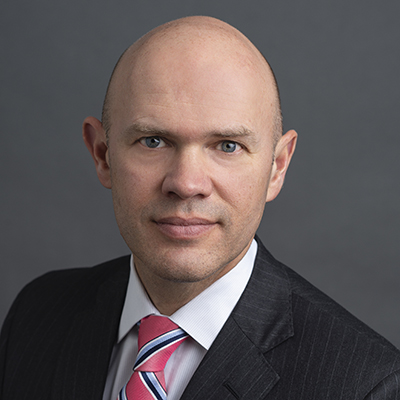
Eric L. Veiel (Host)
Head of Global Investments and CIO
View Transcript
Close
The Long View: An Interview with Dave Ricks, Chair and
CEO of Eli Lilly
“The Angle” Music
Cold OPEN “…back to that tree idea and the roots of the tree
and what's causing the disease, one of those branches might be cancer. What an
impact that could have.”
Eric Veiel
Welcome back to The Angle from T. Rowe Price, a podcast for
curious investors. Just a reminder that outside of the U.S., this podcast is
for investment professionals only.
In this episode, I traveled to the buy side Health Care CEO
summit in our Washington, D.C. office to meet Dave Ricks, chair and CEO of Eli
Lilly, a company at the cutting edge of transforming treatments for diabetes,
obesity, and Alzheimer's disease.
David, thank you for being on The Angle today, I really
appreciate your time.
Dave Ricks
Great to be with you.
Eric Veiel
So, Lilly is on the verge of becoming the first
trillion-dollar market cap, in value, pharmaceutical company. Exciting. Maybe,
let's start with, where you think the company is going over the course of the
next, call it two to three years. The things that you're most focused on as you
look forward.
Dave Ricks
Sure. Well, yeah, we have a full agenda right now. I think
we're excited and lucky to be participating in, I think probably one of the
more important innovation cycles in pharmaceutical history, actually. Every few
decades, there's a kind of breakthrough that actually shifts the curve of human
disease because it's fundamental. And here with chronic disease, I think we're
really discovering that obesity management can have profound effects on human
health at the individual level for sure. We can talk about those anecdotes when
we do our studies. But more importantly, like at a population level. If we can
deploy these medicines broadly, we probably could really reduce the rates of
diabetes, heart disease, even, even, prolong life. So that's exciting to be a part
of. We're the first innovator in the space, having launched the first GLP-1 in
the world in mid-2000s; improved upon that over and over again, and now the
market leader in most major markets.
So, there's probably three things we need to do, to really
make the most of that. One is: improve access. So today, in many, many places
in the world, there's a blurry picture here of insurance and health care
schemes that cover the comorbidities of obesity, but not the underlying cause.
If you think about that, that's kind of a silly position to find ourselves in,
that we're going to wait till you get sick enough from this cause, to then
treat you when we can treat you beforehand. But health care has many other
problems, including funding and so forth, and we can understand that. But we
really need to change that. And I'll come back to that because we had a big
development in the U.S., in the last week.
Secondly, is the, you know, continue the innovation. It's
rarely the case in our sector that the first thing is the best thing. Now in
reality, as I said, we launched the first GLP-1 called Exenatide in 2006, in
the United States. And it was a twice a day. It had; it wasn't perfect. This is
the one that was actually derived from the saliva of a Gila monster.
Eric Veiel
Right. I remember when that hit the press.
Dave Ricks
But most recently, a double acting, long acting. So two
mechanisms, also long acting; that’s Zepbound and Mounjaro, and we're working
on others. So, we can talk about that too, but of course the innovation can't
stop; it never stops at Lilly and we see the opportunity to continue to improve
the experience for users and even the health benefits, there. And then, I think
the, the final thing that's important is building out the indications set. If
you think of obesity as like this root of a large tree that causes chronic
disease, maybe 40% of chronic disease. How can we fully elucidate the benefits
to all those downstream conditions, to drive the first thing, which is more
coverage, but also so that, physicians, medical doctors and consumers
understand that if I can address this at the root, I can stop all these other
illnesses and even, prolong life. So that's happening, too. And we have
currently, like 100 studies running into human disease across Tirzepatide or
Zepbound our main drug, but also many, many others. And excited to see those
read out over the coming, coming years.
Eric Veiel
Let's, let's dig deeper on on access. It's obviously really
relevant for you and for the company, and then, of course, what's happening
right now. So about 8 to 10 million people in the U.S. on some form of a GLP-1,
yours obviously being the leaders there. I've seen estimates that, you know,
the market could be 100 to 200 million people, depending upon how how we define
obesity and the roots, if you will, the people that need them. What's holding
back the realization of that 8 to 10, getting to the to the true 100 million
that need it?
Dave Ricks
Well, I think all three of those things I described, but the
biggest one is the first one, which is access. So, you know, we we consume
health care in a strange way, actually versus other products and services. And
we, we consume it through an insurance scheme that doesn't actually insure
much, in the sense that it's some risk pooling technique, but it is a technique
to get a tax benefit, right? People get; so employers provide insurance and
they get tax treatment for that, and then if we save with HSA accounts, we get
tax treatment. So it's subsidized in a way through the tax code. So, any
medical service that doesn't receive that treatment has a huge disadvantage,
economically. And that's the primary case for the GLP-1 medicines and
obesity medications. Interestingly, not for diabetes. So, there's more sales of
our diabetes version of this than our non-diabetes, even though there's far
more people without diabetes. And I think that shows mostly the effect of that.
So growing coverage is important in the private market, and in state Medicaid
today there's only a handful of states that cover this for Medicaid, and
Medicaid is proportionately more obese than the rest of the country. And then
of course, in the part D program, so that's like the first thing, and we can
talk about the part D deal we have with the government happening soon.
The second thing is, is, as I said, to make these drugs more
convenient, we need to have a market of hundreds of millions of people, and
that you're just talking about the U.S. I would point out globally, there's a
billion people. People, medicines are made. It's kind of a big efficiency in
our industry. We can make one product and its suitable for many, many
people. We don't have customized medicines. Really. There's been a lot of
talk about tailored medicines, but it's not a reality, and economically it would
be very expensive. So, part of the efficiency is we make one thing and it helps
a lot of people. But in a market this size, people have different preferences
for the ratio between weight loss effects and side effects, or even the
evidence base around what medicines proven and another may not yet have. Oral
delivery versus injectable. Long acting. Short acting. So, you know, I would
predict that in the end you'll have many, many of these things available and
people can choose the modality, the delivery mechanism, and the data package
that meets their needs best. So, we're in the process of filling that out, and
that is, has gaps because people try, say, our competitors product and it
upsets their stomach and they just stop. But there's not another alternative.
So now we have an alternative. But that needs to grow. And you know, that's our
focus as well.
And then of course more data helps, especially the medical
establishment. Say, there's lots of medicines we take where we don't feel
better on them, which is different than these drugs where people feel better.
But our doctor says this is good for you. And so the more of those cases, those
uses, those proof points we have the stronger it'll drive that gap between the
few million and the hundreds of millions. Also, global rollouts, you know,
we've spent. I was at this meeting last year and the whole conversation was
about manufacturing build out, because we guessed wrong, as did our competitor
on the demand, in a good way, I guess. We’ve spent the last year making huge
strides here. So we just began introducing Mounjaro internationally for weight
loss. And interestingly, that's three fourths of that is self paid. And so
here access, back to that is important, but in the absence of that, people are
saying I want to manage my own health outcomes. And it's not the markets. It's
not like wealthy countries like Japan and Germany driving it. It's like
Brazil and China. And even in India, we just became the best-selling
pharmaceutical ever, in three quarters. So that's, that's an interesting effect
and it's changing kind of our global footprint.
Eric Veiel
So the capacity to make enough of this drug has got to be
something that you're, you and your board and your are thinking about in terms
of deploying capital to do that. How are you thinking through that,
and especially on a global scale? And, like putting manufacturing to
different countries, that comes with a lot of risk.
Dave Ricks
It does, it does. Well, we've made a big bet here, and
that's the bet on is sort of super wave. And yeah, and this is going to be a
very scaled class. At Lilly, we’ll have many assets participating in it. So,
one thing we've done some time ago is we designed our systems and we're
probably not unique this way, but, you know, so that the active ingredients for
all the medications we're making in this category can be made relatively
interchangeably on the same platforms. And then for the delivery systems, the same.
So that's key because otherwise you end up with these single source pathways
that are aren't flexible. So we built a lot of flexibility. But we needed to
add a lot of capacity. We've been doing that. We've committed to a $50 billion
CapEx agenda.
Eric Veiel
Over what time period?
Dave Ricks
Over five years.
Eric Veiel
Okay.
Dave Ricks
We've announced like 80% of that, but probably only 20% is
operational. So, but if with that 20%, just to give you a sense of the scope of
this, we basically fixed the global supply problem for the current demand.
But we expect even more demand ahead; build out needs to finish. And it's
an important part of running a business like this where we haven't had
medicines that, especially the injectable systems, are peptides, which are
complicated molecules in a sterile delivery device with a plastic machine around
it that allows you to inject yourself. You take it 52 times a year, times
patients chronically. So, although we made a lot of like Covid vaccines,
billions of doses, it was a one and done thing. Here, we're going to end up
having to make billions of things every year for the same people. So, it's a
super scaled business with that complicated injectable system. That all said,
you know, we've had a breakthrough this year in elucidating the whole profile
of our oral GLP-1 called Orforglipron, that's the chemical name. Looks good.
Ruled out the safety issues, weight loss similar to other single acting GLP-1s
like semaglutide. And we'll be submitting that soon to the FDA. In fact, we
just received a priority voucher, so we expect to begin introducing that as
early as first half of next year. And that's a totally different CapEx
agenda, and delivery system but much more scalable. So, I think this really
gives us a big sigh of relief on the ability to meet global demand.
Eric Veiel
Fantastic. So, the fast track of that obviously was in some
ways tied to, to, the negotiations you just had with the White House, here
sitting in DC just a stone's throw away. Maybe, just give us a little insight
into that negotiation and importantly, the outcome.
Dave Ricks
Yeah, well, I'll start with the end. I mean, what we agreed
to was in exchange for signing up for the president's MFN (Most Favored Nation
policy set), which is basically the same deal other competitors have, which is
to lower our pricing to state Medicaid programs for some products that are
cheaper outside the U.S. Not all our products. To introduce new products going
forward in the developed markets at equivalent prices to the U.S. on a GDP
per capita adjusted basis, and then along with that, we agreed to open up
access in the Medicare population, so seniors. Under a good broad criteria of
comorbid obesity, and at a low out-of-pocket cost of $50. So this is, maybe 20
to 30 million new patients.
Eric Veiel
Just on the Medicare.
Dave Ricks
Just on Medicare.
Eric Veiel
That's a big chunk of the medicare population.
Dave Ricks
And Medicaid is about the same. Yeah, it's 60% of the
Medicaid population, but 60% of America is obese. And it, the seniors are more
comorbid because if you've been overweight for longer, you tend to have more
the afflictions that go with that, unfortunately. And the, people who run the
health system, Secretary Kennedy and his people, want to really address the
chronic disease cost curve, but also the health consequences for individuals.
We can think of no better tool to do that than mass deployment of medicines
like Zepbound. So, we're excited to get going on that; that'll start in
the spring, and we lowered our prices to get that done to the government. And
certainly $50 a month for consumers is a great deal. And it's a broad
population, so we expect healthy utilization. And here again, the supply part
was key to enable this; the oral coming out to, to serve that demand for
patients that want that option. Of course the Zepbound, the injectable, will be
available as well. So really an important milestone event. Now, this started;
I've been working on this problem for three or four years, and even in the
Biden administration; at the end of the Biden administration, we got them to
propose a new rule to eliminate a prohibition that's been in place since the 2000s
on weight loss medications in Medicare.
Eric Veiel
Interesting.
Dave Ricks
That was codified into law when they created the part D
program, but the phrasing is weight loss medications, and at the time, of
course, they were. There's two other drug categories, by the way, which gives
you insight into the intent. One was the erectile dysfunction medications, and
the other was hair regrowth. So, you can see where they were going; this felt
like a lifestyle thing and we didn't want that. Of course, what we've shown
and what we have, is totally different than that now. So, the Biden administration,
to their credit, said, okay, let's call this out as not weight loss in that
cosmetic sense, but actually chronic disease prevention, and then handed that
gift to the Trump administration.
They looked at that and said, this will be super expensive
to just adopt on face value. And they said, let's pause it. In response to
that, I went and met with them, including the president, and said this, this is
an opportunity actually, let's negotiate out a deal to enable Americans to
benefit at scale from our, our invention, inventions. And really bend the cost
curve for Medicare and improve the lives of millions. People are going to like
it. So I think everybody wins here, including the taxpayers with long term
health costs, Lilly shareholders, and most of all patients who've been in
Medicare really paying out of pocket, or not getting the medicines at all.
Eric Veiel
Yeah. Do you have a sense of how many in the Medicare
population were paying out of pocket?
Dave Ricks
Yeah, it's between the two medicines available. It's
certainly several million. Some of those are buying illicit or compounded
combinations, which are really knockoffs. So I think this deal will really put
that back into the health system under the supervision of doctors, their
regular doctor. That's an important part. And with FDA approved quality
medication, whether it be from us or our competitor, Novo Nordisk. That's a
much better outcome for the country.
Eric Veiel
And then the oral coming on top of that really is just the.
Dave Ricks
Enhances access and opportunity, and we have another, well
we have 11 of these drugs in our pipeline, including the oral, but we have
another late-stage program with a triple acting. So, this is using harnessing
three mechanisms. If we think of, GLP-1 is one, GIP/GLP that's tirzepatide is
two. Now a triple acting retractortied, and why would you need that, because it
seems these drugs really work well? But actually, like 8% of Americans have a
BMI over 40. And if your BMI is over 40 and healthy body weights 25, you need
more than 23% body weight that Zepbound can provide. If you lose 23% of 40,
that's still 31. You're still obese. So, people who have higher body weights
need to start with more, and then maybe taper to some of the other medications.
Eric Veiel
Do you envision the oral being ultimately, because it's it
has less weight loss as a percentage of body mass.
Dave Ricks
It should be low teens. Low teens versus low 20s.
Eric Veiel
So maybe, maybe, people start off with the injectable but
then end up over time.
Dave Ricks
It'll be stratified. So, like one of the indications that
will be covered by the federal government is BMI’s of 27 down to 27. So that's
just, you know, 15, 20 pounds overweight for most people, but with
prediabetes. And that's because we demonstrated in a big study that we can
prevent almost all diabetes conversion from prediabetes if you use these
medications. I mean, think of the impact of this. You could dramatically reduce
the incidence of diabetes in Medicare and in the country. So here, if your BMI
is, you know, 28 and you have prediabetes, I think the oral will definitely get
the job done to lose 12% of that. You're healthy body weight. You suppress the
diabetes and and you're healthier. So I think it'll stratify by your current
situation. What are your comorbidities? What is your body weight? You might
need a more powerful medicine. The more severe those things are. But then as
you become healthier, you could use the oral for maintenance or, taper into
that.
Eric Veiel
So clearly there are other diagnoses that you all are
thinking about that this class of drugs could be powerful for. Maybe give us a
little insight into what some of those could be. I mean, I've heard people talk
about it from everything from alcoholism to other types of addiction. You know,
beyond that.
Dave Ricks
Yeah, I think there's four spheres. So of course we develop
these drugs for diabetes. And then we think about diabetes. The major risk if
you have type two diabetes is actually heart attack and stroke. It's a; seems
unrelated to your pancreas, but actually elevated blood sugar is a key risk
factor for cardiovascular risk. And there's a series of other related
conditions to this cardio metabolic system. And so those have been either
already read out as studies or will very soon, things like fatty liver disease,
chronic kidney care, congestive heart failure, stroke. So, these, these, are
all in the pipe and will read out for our medicine and others. I think what we
didn't design these medicines for, but they've proved quite interestingly
useful are three other areas. One is inflammation. So, a lot of chronic
inflammatory conditions are very bothersome to live with. They cause other
consequences. Sometimes the medicines themselves, like steroids, cause
additional damage. So, addressing chronic inflammation is a key thing. And it
turns out when you, for reasons we don't fully understand yet when you
treat with these medications, within weeks, inflammatory markers dropped
precipitously.
Eric Veiel
Interesting.
Dave Ricks
CRP, C-reactive protein was sort of like an end one or IL-6,
which is a key one for joint disease, but also heart health. All drop. So
that's an interesting new space. We have a study that will read out in the next
few weeks on top of, medicine we have for psoriasis. That'll be people with
obesity and psoriasis on top of this and can we beat the standard of care, our
own medicine. So yeah, that's a whole new.
Eric Veiel
Feels totally unconnected for my you know. Yeah. Finance
brain. But yeah.
Dave Ricks
But, you can think of this as like, a booster and a lot of
these, these inflammatory diseases are, have higher rates in people who have
obesity. Another field, you mentioned, is like brain health, addiction. And we
noticed this spontaneously in our bigger trials that alcohol use, tobacco use,
even other harmful substances. Drop. And that's a little confusing because it's
like, huh, how does that work? But in a general way, one of the main things
that these drugs do is they, they increase satiety, and they, they sort of tap
into the dopamine part of eating in a way. Like, we have all felt full, and
then you eat dessert anyway. And I think a lot of people, Thanksgiving's coming
up, and maybe some of us will get the, the, pumpkin pie when we don't really
need it. And I think what these medicines often do is sort of really tamp down
that urge for that sugar feeling, and in the same way they address that urge
for nicotine, and for one more drink when you don't need it, etc. So, we've
observed that spontaneously, we're going to study that prospectively. That's
how we have to do science, and that study starting now actually with a new
molecule, a totally different molecule, that'll be dedicated to brain health
use.
The one we're not addressing, but the data looks
increasingly strong, is actually in cancer. So, there, it's been known for a
while that cancer incidence is higher for some cancer types in people with
obesity: colorectal cancer, for instance, some types of like prostate cancer or
bladder cancer, etc. So, people have then been looking retrospectively and say,
okay, well, for those that had obesity and use these medicines often for
diabetes, what was the cancer incidence rate, and did it change, and it does, in
the right direction. The new questions being asked is if you already have a
diagnosed cancer, like co-administered, does it actually slow tumor growth.
Again here early; there's a study this week looked pretty good, on a kind of
liver cancer. So yeah that's harder to study; that's a more complicated
disease, but maybe, we'll get to that too. And again as I go back to that tree
idea and the roots of the tree and what's causing the disease, one of those
branches might be cancer. What an impact that could have.
Eric Veiel
That's amazing. One of the, speaking of brain health, the
another area that that Lilly has been, you know, on the forefront is
Alzheimer's disease. And that's, obviously something that affects lots and lots
of people. And either directly or indirectly, maybe talk a little bit, I mean,
there was so many different tries at treating this disease, where you all are
on your journey for, for treatment.
Dave Ricks
Yeah, we've been studying and had a, had a really focused
effort on Alzheimer's for basically 30 years at Lilly. And I've personally sat
in the readouts of like five or six failed studies. But, you know, sometimes
you fail and you learn, and sometimes you fail, and it just wasn't a good idea.
Here, we always looked at and say, actually we learned something here, let's
make an adjustment, either in the types of people that we're treating, because
it turns out that we thought was Alzheimer's and dementia were interchangeable.
They're not. Alzheimer's is a subtype with very specific pathology and
characteristics. So isolating those people in our studies and then, having a
medicine that addresses the true root cause and what's the right target. And
then do you have a drug good enough to treat that target in a disease where you
have decay. If it's too slow to work, what's it matter if you're decaying
anyway? So, we have a drug we have approved now Kisunla (donanemab), which was
very successful in its phase two studies. It's just got approved in Europe. So
now we're launching globally. You know, for those that can navigate the health
system, it's been a great source of relief, but also, impact on decay. The
biggest challenge we have is the health system's not well set up to treat
Alzheimer's, but we're working on this. We have a competitor at ECI, has got a
similar medicine that that's working on this, too. And every day we see more
and more people treated for Alzheimer's, which is a great outcome. We also have
a big study, which is underway and hopefully in the next two years we get the
result using the same medication for prevention of Alzheimer's.
Eric Veiel
So this, this is, involves a blood test to find; someone was
telling.
Dave Ricks
So here if you think of this disease, a parallel disease
might be heart risk. So, we've been educated to know that the markers of heart
attacks, and the risk for this can be known in advance. Yeah. We're both in our
50s, and we might have had a calcium test on our heart to see, well, how much
how calcified is plaque? And that indicates your risk of a heart attack in the
next ten years. You can think of amyloid plaque in your brain as a similar kind
of thing. We can now image that, and Lilly, along with a few others, developed
a blood-based biomarker. It's a binary biomarker, but it basically says you're
at risk for having elevated plaque. Pet scans and visual screening of this is
more expensive and difficult, so it's really helpful to just have a simple blood
screening. Think like a PSA test for prostate cancer. You can put in your
annual physical. If that starts to rise, you could get examined to see if this
plaques in your head, well before, years before symptoms. So we're setting our
medicine to then deplete that plaque before it becomes a problem, and that
would be, of course, a huge public health need.
Eric Veiel
And is the technology there to observe the reduction. So
it's preventative, so you’ll do a controlled study?
Dave Ricks
We can do that with both the blood based which is a good
proxy although not perfect. So specificity. Not exactly the same as Pet scan
which we take is the gold standard. In our studies, we do repeat Pet scans and
can show that, really in the course in, in so in the indicator population now,
which are people with mild symptoms of Alzheimer's, we can measure rapid and
significant depletion of plaque, more than 80% reduction in like a year. Even
to undetectable levels in many people. And we, unlike the competitor product,
you discontinue the medication when the plaques depleted, because it's now
known it takes years and years to rebuild up the plaque. So for people who are
in their 70s, they probably never need to be treated again. For prevention,
it's probably built up in the later part of your life. You can deplete it and
then reduce the risk in the next 10 or 15 years of having, having the disease,
and that would be a massive public health breakthrough.
Eric Veiel
Massive for sure. Yeah. It's And when do you think that
breeds out?
Dave Ricks
In the next two years. Yeah, it's an event study. Everyone's
actually had the treatment, and one of the convenient things about our
medicine. Here again, we would be used to be treated for nine months and then
that's it for the rest of your life. So you go through a course of treatment to
remove the plaque and then it will build up slowly again, but not to the level
of risk, or will take many, many years. That's what's thought. We have to prove
all that and that's what the study is doing. And this is an example of
something Lilly’s thinking about differently. And it might be interesting to
the listeners, you know, some of the challenges in drug development are
technical, like we can't get the drug to work as well as we want. And in
Alzheimer's, that was the case for many years till we found this molecule. And,
and it seems good enough to really strip away those plaques. But some of the
problems are actually that the diseases themselves are slow. And in our world,
we have to give a return to our investors and justify investments in projects
based on the patent life. Which is 20 years. That sounds really long, but
includes all the development time. So, if a disease is slower than, let's say,
5 to 7 years, it actually becomes impossible to study in some ways because you
don't have enough time to recoup that investment. But what Lilly's doing here
is we've invented a follow-on molecule that has some improve properties,
including self administration. We're skipping over that treatment step at the
beginning, going straight to the longer, harder prevention study and can recoup
our investment there, but can also demonstrate meaningful benefit. So most
companies don't run parallel projects like this or even invest in these, what
can be multi-year, almost decade long, experiments. But for, to really conquer
chronic disease, someone has to do this work.
Eric Veiel
What what sort of inspired you all to take that path? Was
that something that you started the company down, was the.
Dave Ricks
Yeah. Well, myself with our head of science, Dan Grabowski,
who's actually a real neuroscientist, we both have passion to fix this problem.
I think that's what Lilly's for. Like, we're a big company with lots of
resources. We should take on the hardest problems and attack them with our
science. And if we fail, that's fine. That happens. But if we can make
progress, we should. Because we had so much experience in Alzheimer's
treatment, the next logical thing is prevent it, and so we started these
programs, actually, right during Covid, and here we are in 2025 and it will
readout in 26 or 27. That's an example of long and hard. There's thousands of
patients in this study which is expensive to run. But of course, to make
progress against tough disease, that's what you have to do.
Eric Veiel
You've I've, I've heard you in other venues talk about
purpose and how important purpose is for for the company and for you and just
keeping the workforce motivated. Let's pivot a little bit and talk, talk about
sort of your leadership style and how you use purpose as part of it.
Dave Ricks
For sure, well, I think, every business has a purpose and,
sometimes that's fun and sometimes that's rewarding intellectually in other
ways. We have those things, but probably more than other or maybe any other
business health care and particularly medicine. And we've rebranded ourselves
as like a medicine company because medicine implies more than just the drug.
You know, it's the practice of medicine, etc., is emotional. And I think what
we know about human motivation is like, people will really work for that sort
of emotional connection, a sense that we're doing something beyond ourselves
that makes a difference in people's lives. And it really, the circle really
gets closed when you experience that yourself. And I think many, many
employees, not all Lilly employees, but many have had that happen where a
project they worked on. Or something, they know the company did, directly
helped themselves or someone they care about deeply. And that's fine, if it's
like my iPhone battery lasts a little longer or my car is more efficient, but
it's particularly meaningful when it's a life or death, or even just a life
extending or life improving situation. This happened to me early in my career.
So I started my career in the like BD, M&A group at Lilly and actually was
part of bringing in a medicine to the company from another company. We launched
it in the U.S., and I went actually and helped launch that. And shortly
thereafter my mother was diagnosed with a condition and she received that
medicine. And, I was like, yeah, that's what I said. I was like, okay, click, I
get it, this matters. And I will do this until I can't anymore. Like I want
more of that feeling. And I think so many people at the company tap into that.
When we reduce the business to dollars and cents or KPIs, we
need those things to help us. But this is like a leadership thing on
communication and meaning. At the end of the day, people make it happen, you
know, and we can ask people to, you know, hit their KPIs or dangle incentives
in front of them, financially. But what really rings the bell for most people
in our company, and probably our industry, is the feeling that I moved the
needle on human health. And by the way, the work we do isn't transitory. Often
you change the standard of care forever. Because medicines don't go away. They
go away for us, but they become generic and cheap and part of care. You just
move. You move the ratchet of what's possible. And that just fills people with
energy. And, you know, as a result, I don't think it's an accident. You know,
we have a tight knit company. People stay there a long time. They work on hard
problems like preventing Alzheimer's over long periods of time. Which can seem
rather dissatisfying if you think about it. But when you know that it can
affect people and maybe people you know and really care about, you'll do things
for a long time. I was a parent for a long time. You know. I still am, right?
That's long and hard. Yeah, but you care.
Eric Veiel
You do it.
Dave Ricks
And I think I'm here for human health. It's. Yeah, such a
powerful motivating force. And we've reorganized, like, all our, you know, how
we communicate, how we talk about working together. Our leadership,
expectations and values around this idea. And I think it's been a key to
Lilly's success.
Eric Veiel
What are the, you know, the people that that come to Lilly,
you referenced, staying for a long period of time as you've gotten to see, you
know, the best performers at your company. Have you identified any
characteristics that are consistent across the, the very best?
Dave Ricks
Yes. We've, and it's not just me. We've been at this a long
time. So I think people think. We’ll turn 150 years old next year. And there's
you can count on little more than two hands.
Eric Veiel
I thought we were old at 87 years at T. Rowe.
Dave Ricks
I think a little more than two hands the number of US
companies that are that old and publicly listed, those family companies, maybe.
And surely Lilly has the highest market cap of any of them. So we can say we
are the most successful old company. And those things don't often go together.
I think we think of like, in a technology driven world of like some turnover,
and how do we keep that? And the key here is like behavior and culture. You
know, our company's had steady leadership. And in our industry we have very
long development times, I've discussed. Actually, having like consistency at
the top I think makes a pretty big difference. I'm the 11th CEO of the company
in 150 years. Yeah. And as I've said before that's, that's one less than Pope’s
in that period of time. And that's a lifetime appointment. But, you know, it's
an honor to lead something like that, but also a responsibility to see through
the ups and downs. And part of that is caring about your team in a way that
isn't, you know, too extreme when it's things are going well, like, now, but
also, you know, when things are tough, which happens, you know, sticking with
the people that got you there.
Strategy, consistency. So I see competitors flip flopping
around picking, oh, we're going to be about this now and that next. But we
actually really haven't changed our strategy in a very long time. We make
innovative medicines, and we invest heavily in R&D. We're a global company.
We tend to own and operate our own model end to end. And we like that. For
control. Those are choices we've made 20, 30 years ago by my predecessors. And
sticking to that allows people to get good at it. And then, you know, it's less
about the choice and more about whether you can execute it. And I think we're
good at executing that. And then the final thing is knowing each other,
including your leader. Right. So you may have maybe people have worked for
companies, a new person comes in and then no one really knows what to do.
Because, oh, what's so-and-so think of this? And what is she going to do when I
say that, or, you know. We don't have that, we can finish each other's
sentences and like me or not, like, you know what you're getting, right? I've
been there 30 years.
Eric Veiel
They haven't figured you out at this point.
Dave Ricks
People can figure that out. And the same with all of my
reports and the people around me. Big often creates inefficiency. So we're very
focused on curbing headcount growth, keeping the Lilly family as intimate as it
can be. But that's not just a cost thing. It will probably be good for cost,
but more importantly, effectiveness. I know thousands of people on a first name
basis in my company because I've spent three decades there, and I'm not alone.
And so I think in a lot of companies, problems occur and then no one really
knows what to do about it. So the problem just festers. Here, we all kind of
maybe in a nosy way, know what everyone else is doing, but we also know each
other. So if we have a problem we can ask for help. And we don’t need a
committee to be formed or a task force, people just do it. And I think that
gives us a kind of speed and efficiency that's special.
The final thing is what you're saying is talent and Lilly,
maybe more than of those 11 CEOs, there's been one outside hire. And maybe more
than other companies, we tend to grow our talent from within. I think there's
three or four other CEOs in our sector that started at Lilly. And so we're also
a place people come and do well elsewhere. And that's great.
Eric Veiel
You're an exporter of talent as well.
Dave Ricks
Exactly. And so I think there are traits and attributes.
Curiosity. We're a midwestern company, a little bit of humility. And a medicine
and science is humbling. So don't get over your skis too much. Hard work, also
a midwestern thing, I think people put in the time. People want to put in the
time, they work hard and they want to be rewarded for that and be a part of
something special. But then also teamwork. Working together. So the key for us
is to have like shared goals and accountability to each other, plus being a
nice place to come to work. And being part of a team and you know, maybe more
than any other sector, pharmaceutical development is the ultimate team sport.
We have to bring together dozens of disciplines where people study and get
advanced degrees. And they don't actually speak each other's language. I mean,
they speak English, but they don't speak each other's.
Eric Veiel
Science of, discovering a drug in market.
Dave Ricks
Exactly, so marketing, chemistry, manufacturing and
engineering, technology, all this stuff has to come together, maybe more than
most other industries. And that that teamwork piece and those common values,
those shared attributes of what makes you successful have been important for
us.
Eric Veiel
I would be remiss as we talk about sort of culture and
efficiency, if I didn't ask you about AI and how you're thinking about it and
how it could change your company. You guys have announced something with
Nvidia, very recently. So maybe tell us a little bit about how you're weaving
that into, into the future.
Dave Ricks
I mean, I'm, I started my career at IBM, actually, and I’m a
techno amateur anyway, like everyone else in the world, and in November of 22,
I downloaded ChatGPT and started playing with it and were like, whoa, this
feels like something quite different. We had been doing things that we called
back then, you know, analytics and machine learning and rule more heuristic
driven, processes with machines. And we've ramped that up as well. That still
works, by the way. And we've added to that with a number of AI initiatives. I
think there's like three layers. And maybe I'll give you my kind of grade as to
how they're going. The first layer is like the common thing all businesses will
do is we use enterprise software and we want to make our workforce more
efficient and spend less on G&A and more on projects, and here we've been a
good adopter of all these tools. I have to say, I mean, there are some point
use cases that have really paid off, but in the whole it's a little
disappointing. Right. I think we're all kind of waiting for like yeah okay.
When do I not need, I don't know an admin assistant. Or when like booking a
trip. This seems like a basic thing, but I don't know about your company, but
at my company you are still the person and do it. Fill out my expense reports
automatically. Like, you know, the things that we all find annoying. There's a
lot of work to do there, and I'm hopeful that will happen. In the middle, or
what I call industrial AI. So we use software and data to run processes that
are pretty unique to Lilly or the sector. But there aren't these scaled SAS
tools that you can just buy. You have to config best case, or maybe even write
your own code, or stitch together three other things to make it do what it
does. Actually, here AI has been a breakthrough in two ways. One is, it is
really good at coding. So you can upgrade and replace and make code for these
use cases pretty fast yourself. I don't know what that means for like the
systems integrator business in the future, but it's probably less work like
that.
The second thing is, if you have really prediction problems
like algorithmic prediction problems, it used to take a lot of work to build a
custom machine that would correctly predict things in a way that could improve
your operations. And now, actually, the power of these large language models is
is of course, they're great at language, but they're also easy to reprogram.
It's all tokens in, tokens out. What the tokens mean and the weights of the
tokens. So take something like a manufacturing plant and pharma. Because of
regulatory needs, we've had to record in incredible detail all the data of
everything coming in, everything happening in the plant, everything coming out.
So we have really clean data that you can just train, off the shelf, open
source LLM, and ask it to predict what will happen next. With a variety of
inputs you can simulate it in a digital twin sense or even in runtime. Have it
say, oh, actually, there might be a stoppage on the line because of this thing
that just happened here. You won't notice it for ten minutes, but I'm
predicting it. And this really works.
Eric Veiel
That's amazing.
David Ricks
Yeah. And we have some super powerful, like thousand to one
ROI kind of projects with this. I don't know what that means for the software
industry because the tools we're using are not fancy. But, it's good for our
business. The holy grail, of course, and what Jensen and other CEOs talk about
in the AI world, and we talk about is: how can we speed up science? And here
it's kind of I think we're it's early innings. We don't have big breakthroughs.
But, you know, maybe someday I think we're investing in this Nvidia
supercomputer to build, like, foundational models for science, which is a big
training exercise. We have a lot of data that's not in the public domain. We
have advantages and reasons why we should be able to do this. You know, in that
world, like the chemistry, protein chemistry and organic chemistry is more
well-defined and easier, part of the trick. The hard part is the human biology
side, because you have to solve this problem at the basic level, like the gene
encoding proteins at the organoid level in cells, which are more complicated.
How did the mitochondria take up drugs and whatnot? How do cells themselves
behave? How do groups of cells and organs behave? And then that all adds up to
a human. So there's like this hierarchical kind of failure modes that happen.
Predicting that, other than running experiments in laboratory animals and then
scaling to humans has not been that successful yet. But maybe with more data,
the prediction machines can do their job.
Eric Veiel
That's fantastic. Dave, this has been really interesting.
Really appreciate your time. I know you've got a busy schedule ahead of you for
the rest of the day, but I appreciate you carving out a few minutes to, to sit
down with us. Thank you very much.
David Ricks
Great to be with you. Take care.
Eric Veiel
Again, I'm Eric Veiel. Thank you for listening to The Angle.
We look forward to your company on future episodes. You can find more
information about this and other topics on our website. Please rate and
subscribe wherever you get your podcasts. The Angle. Better questions, better
insights. Only from T. Rowe Price.
Disclaimer
This podcast episode was recorded in November of 2025 and is
for general information and educational purposes only. Outside the United
States, it is for investment professional use only. It is not intended to be
used by persons in jurisdictions which prohibit or restrict distribution of the
material herein.
This podcast does not give advice or recommendations of any
nature; or constitute an offer or solicitation to buy or sell any security in
any jurisdiction. Prospective investors should seek independent legal,
financial, and tax advice before making any investment decision. Past
performance is not a guarantee or a reliable indicator of future results. All
investments are subject to risk, including the possible loss of principal.
Discussions relating to specific securities are
informational only, and are not recommendations, and may or may not have been
held in any T. Rowe Price portfolio. Any forward-looking statements are for
discussion purposes only and are never guaranteed. There should be no
assumption that the securities were or will be profitable. T. Rowe Price is not
affiliated with, or a subsidiary of, any company discussed.
The views contained herein are those of the speakers as of
the date of the recording and are subject to change without notice. These views
may differ from those of other T. Rowe Price associates and/or affiliates.
Information is from sources deemed reliable but not guaranteed. Please visit
https://www.troweprice.com/en/uk/insights/the-long-view-eli-lilly for full
global issuer disclosures.
This podcast is copyright by T. Rowe Price, 2025.
202511-4869243
Further Listening

The Long View: Interview with Sarah Friar, CFO of OpenAI
In this episode, OpenAI CFO Sarah Friar talks to Eric about OpenAI’s explosive growth, global strategy, technology investments, and how AI agents are reshaping business and daily life.

Beyond Luck—Behavioral Science and the Art of Decision Making with Annie Duke
Annie Duke—a former professional poker player and renowned author on behavioral science—discusses the science of decision making and how it can be applied to investing with Justin Thomson, head of the T. Rowe Price Investment Institute.

The Long View: Interview with Jane Fraser, CEO of Citi
In this episode, Jane Fraser, CEO of Citi talks to Eric about the challenges of being a CEO, why she is optimistic about the U.S. economy, and how Citi are using AI to increase productivity.

The Angle from T. Rowe Price
The Angle podcast brings you sharp insights on the forces shaping financial markets. With dynamic perspectives from the T. Rowe Price global investing team and special guests, curious investors can gain an information edge on today’s evolving market themes. The Angle - only from T. Rowe Price.
Better Questions. Better Insights.
Subscribe to never miss an episode
With a new episode available every week, subscribe on your favourite podcast service and be the first to be notified!
Disclaimers
Important Information
This podcast is for general information purposes only and is not advice. Outside the United States, this episode is intended for investment professional use only. Please listen to the end for complete information.
This podcast episode was recorded in December 2024 and is for general information and educational purposes only. Outside the United States, it is for investment professional use only. It is not intended for use by persons in jurisdictions which prohibit or restrict distribution of the material herein.
The podcast does not give advice or recommendations of any nature; or constitute an offer or solicitation to sell or buy any security in any jurisdiction. Prospective investors should seek independent legal, financial, and tax advice before making any investment decision. Past performance is not a guarantee or a reliable indicator of future results. All investments are subject to risk, including the possible loss of principal.
Discussions relating to specific securities are informational only, are not recommendations, and may or may not have been held in any T. Rowe Price portfolio. There should be no assumption that the securities were or will be profitable. T. Rowe Price is not affiliated with any company discussed. Some T. Rowe Price portfolios are invested in New York Times Company.
The views contained are those of the speakers as of the date of the recording and are subject to change without notice. These views may differ from those of other T. Rowe Price associates and/or affiliates. Information is from sources deemed reliable but not guaranteed.
Distribution Information
EEA—Unless indicated otherwise this material is issued and approved by T. Rowe Price (Luxembourg) Management S.à r.l. 35 Boulevard du Prince Henri L-1724 Luxembourg which is authorised and regulated by the Luxembourg Commission de Surveillance du Secteur Financier. For Professional Clients only.
Switzerland—Issued in Switzerland by T. Rowe Price (Switzerland) GmbH, Talstrasse 65, 6th Floor, 8001 Zurich, Switzerland. For Qualified Investors only.
UK—This material is issued and approved by T. Rowe Price International Ltd, Warwick Court, 5 Paternoster Square, London EC4M 7DX which is authorised and regulated by the UK Financial Conduct Authority. For Professional Clients only.
All Spotify trademarks, service marks, trade names, logos, domain names, and any other features of the Spotify brand are the sole property of Spotify or its licensors.
202511-5014928