The courage to be wrong with Dan Gardner
October 2026
Overview
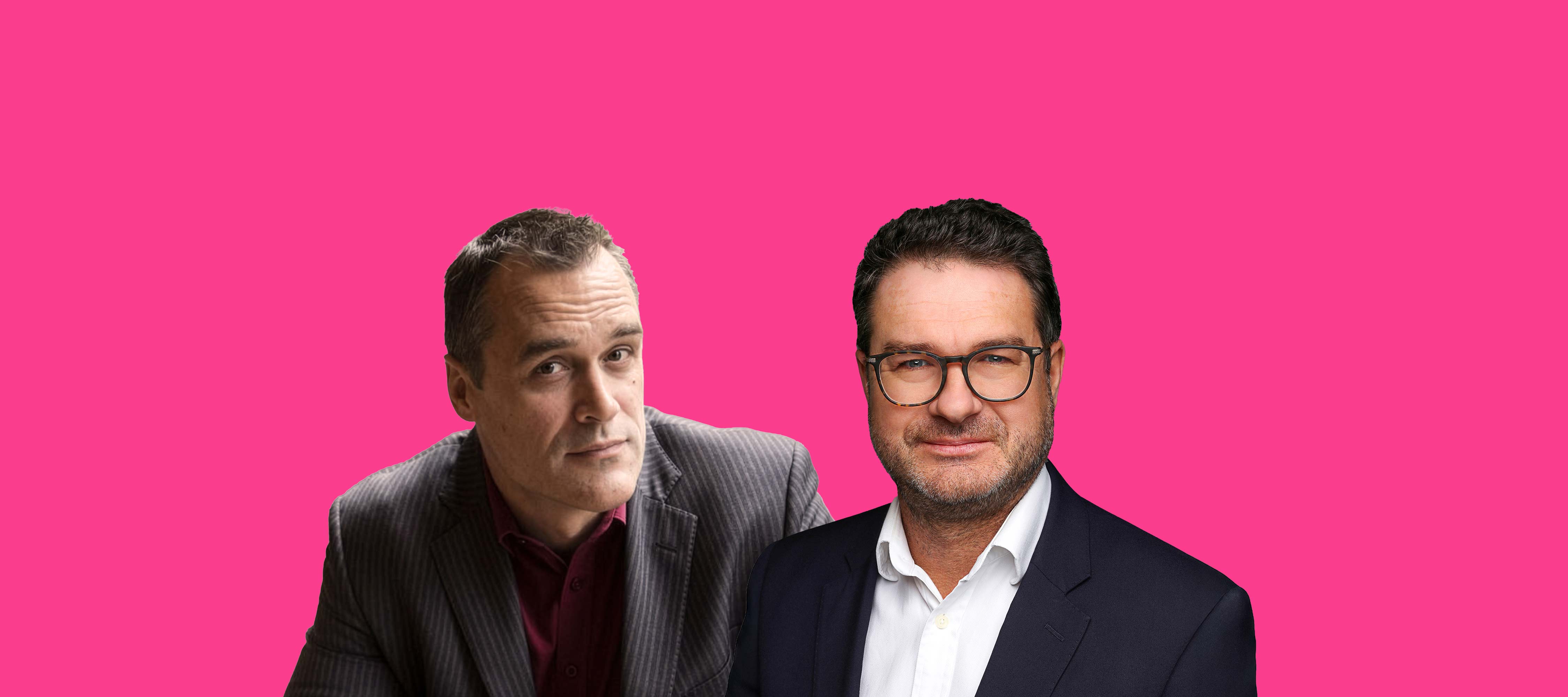
In this episode of The Angle from T. Rowe Price, Justin Thomson, head of the T. Rowe Price Investment Institute, sits down with Dan Gardner, bestselling author and co-author of Superforecasting: The Art and Science of Prediction, to explore what sets consistently good forecasters apart and what investors can learn from them.We find out why intellectual humility is foundational to good judgment, why investors should think in probabilities rather than certainties, and why starting with the base rate can sharpen a forecast. Dan Gardner also discusses how to update views in small increments, why admitting mistakes can strengthen rather than threaten an investor’s identity, and why good questions may become more valuable as high-quality answers become more abundant.
Podcast Host
 Justin Thomson
Head, Investment Institute and CIO
Justin Thomson
Head, Investment Institute and CIO
Speakers
 Bestselling author
“The Angle” Music
Cold OPEN: “What's not going to change? Questions. Good questions. My belief is that the value of high-quality questions will soar. The value of answers is going to decline. The value of high-quality questions is going to soar."
Justin Thomson
Welcome to The Angle from T. Rowe Price, a podcast for curious investors. Just a reminder that outside of the U.S. and Australia, this podcast is for investment professionals only. Thank you for joining me today, I'm Justin Thomson, head of the T. Rowe Price Investment Institute.
Today I'm thrilled to welcome Dan Gardner to The Angle. Dan is an award-winning author and an expert on decision making, risk, and how we navigate uncertainty. He has written four books, including Superforecasting, coauthored with academic Philip Tatlock, which is going to be the focus of our pod today.
Superforecasting {The Art & Science of Prediction} explores why some people are consistently better at predicting what happens next, and how the principles of superforecasting can help us make better decisions in an uncertain world. I forecast this is going to be a super conversation. Dan, welcome.
Dan Gardner
Delighted to be here.
Justin Thomson
Dan, I'm here to pick your brain, not to plug your book. But I think in superforecasting you have created something really useful, and at the same time, it's great entertainment. What we call in the UK, a ripping yarn. So, tell us a little bit about the background to the book and what you set out to achieve with it.
Dan Gardner
Sure. It's interesting, I was wondering, where do I start the story? I think I start, oddly enough, with Saddam Hussein. It all started with Saddam Hussein. You'll recall that the invasion of the, of Iraq by the United States in 2003 was predicated on the premise that Saddam Hussein was stockpiling weapons of mass destruction in violation of United Nations sanctions. Then they invaded and they discovered, they looked high and low, and there were no weapons of mass destruction. But the officials with the office of the Director of National Intelligence, which is the, basically the agency that oversees the entire community, they recognize that this is, you know, we've got to do better than this, folks.
And so, they started to look into that, and say, well, for our forecasting, is our forecasting as good as it can be; could we make it better? And so one of the very first things that they did in asking that fundamental question was they went to my coauthor, Philip Tatlock, who is at the Wharton School, University of Pennsylvania, a very eminent psychologist. And basically, Phil actually pioneered research on expert forecasting in research that he did in the 80s and 90s. And the first thing that Phil told him was, well, first of all, we actually don't even know how good your forecasting is because you've never subjected it to proper testing, which is bad, right? That's kind of ridiculous, in fact, given how important your forecasting is. Then Phil suggested basically that they create a forecasting tournament in which you would have basically competing teams using competing; whatever competing methods that they chose to try and forecast real world questions. The sort of very difficult questions that the intelligence community has to answer, you know, and then you would have these people make those forecasts. You could then, after time passed, you could judge the accuracy of the forecasting, you could compare what was working, what wasn't working, and so on.
Long story short, they end up creating five university-based research teams. They compete on these real-world forecasting questions. The team that was created by my coauthor, Philip Tatlock, was called The Good Judgment Project. And out of that group they used, basically volunteers. They asked for volunteers to make geopolitical forecasts, and in that group there is a very small percentage, you know, 1 to 2% of these people who were consistently top of the charts. They were really, really impressively good. I can give you all sorts of metrics to show how good they were, but they were just amazingly good. And that's the term. Hence, the term superforecaster simply means top of the charts. It sounds a little grandiose when you say superforecaster, but that just means top of the charts. And I emphasize that these people were consistently good, very key. Because of course, when you're consistently good over time, you can be confident that you're looking primarily at skill, not luck. But, intellectual humility is absolutely foundational to good forecasting judgment. Good forecasters are, at root, intellectually humble. They know that the world is a big, messy, complicated place, and forecasting is a damned hard business.
Justin Thomson
As is the case in our business, Dan. As is the case, as we've all been watching the Odyssey. As I say, nemesis always follows hubris.
Dan Gardner
Yeah, absolutely.
Justin Thomson
And markets are great things at making you humble. And take this to investors and I'm, I'm, excited, really excited by this because I've noticed some of what you talk about starting to seep into our investment lexicon. So, Inside view. Outside view. But for the purposes of this, for people that aren't familiar with this terminology, could you just explain what you mean by A: base rate; B: the inside view; and C: the outside view?
Dan Gardner
Sure. So, base rate. Statistician will tell you the base rate is the category. How common is this thing within the category? If, you know, 95% of basketball players are above average height; it's probably higher than that. But, then the base rate would be, you know, of, of above average height, basketball player would be 95%. Now, is that important? Should that be in your forecast? Absolutely, of course it should. It's perfectly obvious that it should, but here's the strange thing. It routinely is not, when people judge what's going to happen. They routinely ignore base rates, and that's where; now, let's switch the terminology. Daniel Kahneman, the great Nobel Prize winning psychologist, coined these terms the Inside view and the Outside view. The inside view is the specific case. You know, it's a basketball player. It's you know, it's whatever the situation is you're looking at now. The outside view is the category. It's that whole group of basketball players, or the whole group of situations like this. And what we know from psychology is that when people go to judge, well, how likely is this thing or, or how common is this thing or whatever? They will zero in on the particular, they will focus on this case, and they'll go up one side of it, and down the other, and look at all the details, and they'll use those details to draw a conclusion and form a judgment.
What they will not do naturally is the thing that they absolutely should do, before you get to the particular case, before you get to the Inside view, consult the, consult the Outside view. Actually, to use an example from one of my more recent books, it's about big projects. It's called “How Big Things Get Done”, is the name of the book; and that is a plug. It's available on Amazon. But this is the very same concept as that work in megaprojects. So, the forecasting is routinely wrong. Why is that? Because people focus in on the particular case. So, if you're building a bridge, you know everything about your bridge that you're building. You know all the measurements, the materials you've got, all that detail, and then you'd make your forecast out of the basis of all those particulars. Whereas. And that's perfectly normal, that's what people routinely do. Whereas, what you should do is say, what's the category? Bridges. What's the average cost of a bridge? That's the starting point for your forecast. And in fact, there's good research on megaprojects that shows that if you use only the Outside view, only the Base rate as your forecast, you'll probably do better than the people who go up one side and down the other side of the Inside view. The particular case.
Justin Thomson
I love some of the examples you give. Like, how many piano tuners are there in Chicago?
Dan Gardner
Yeah.
Justin Thomson
These are great exercise, fun exercises. But you know, good exercises in in logic as well. Let's continue the basketball analogy because it was said by somebody that you can't coach height, but you can coach superforecasting, and you can get better as an investor. That is one of my overriding themes is that nobody's born innately a great investor, or indeed superforecaster. But with self-knowledge, self-awareness, process, and practice, you can get better and better.
Dan Gardner
It's what you do that matters. Your inclination to do those things isn't so important. If you have, I mean, I've got a great long list of sort of the, the, the habits of mind of superforecasters, the techniques of superforecasters. And you may be one of those people. How fortunate for you that you are just naturally inclined to do all those things. But if you don't do those things, your forecasts won't be all that good, will they? Conversely, you may be somebody who is not at all inclined to think in the sort of manner that superforecasters do. But if you look at that and you say, well, they're getting good results. Maybe I should try that. Maybe I should practice that. Maybe if I do that enough, some of this will start to become habitual and it will become more natural to me. If you do those things, you will get better forecasts, and gradually, over time, your skill will improve.
And here's one of the really interesting aspects on that great long list of character attributes and habits of mind of superforecasters. One of them is the belief that you can practice forecasting and get better at it. The superforecasters, most of those people, the reason why they signed up, the reason why they volunteered to be in this research program and spend their free time making geopolitical forecasts is, because they really, sincerely believe that, in doing so, and in being scored, and in learning from their mistakes, that they would get better over time. And guess what? The research showed that was correct. But it's that foundational belief, right? You're not going to do that unless you start with that foundational belief.
Justin Thomson
Music to my ears. Absolute music to my ears. I love that. And you know, the people you talk about who were superforecasters were very different backgrounds, perspectives. But what I, what I picked out of when I was trying to profile these people was in terms of IQ, top quintile, but not genius level. Analytical and organized in their thinking.
Dan Gardner
Very.
Justin Thomson
This is partly the same point, but hungry for new knowledge, hungry for new, always hungry for new.
Dan Gardner
Deeply curious.
Justin Thomson
Deeply curious. I thought this was a great one because you talk about Enrico Fermi, and how he broke complex problems down into smaller tasks. You called that ‘Fermiazing’. Doesn't trip off the tongue Dan, but I see. I see where you see where you went. But I think that's a good way to approach it. Comfortable with assigning numerical odds. And this is where we start, the absence of hubris to the extent you are prepared to be wrong and continue to look at new information, even if it disaffirms your original forecast. So, what in behavioral finance, we would call the absence of confirmation bias.
Dan Gardner
Right. Yes.
Justin Thomson
Have I missed anything?
Dan Gardner
Oh, there's probably if we were to sit down and as I say, come up with, you know, sort of a list it would be, it would be a longer list. But for the purposes of a verbal conversation as opposed to a bullet point list, you know, what matters here is what are the themes connecting these elements. Right. Because I really believe that this is true, and, I mean, in fact, I spent a lot of time with superforecasters walking with them through their thought processes, and so on, and you could see, I swear, you could see the theme connecting the dots. It was quite amazing. And to me, it is when you say the absence of hubris. Well, let's flip that around and put it in the positive. That's intellectual humility, right? It’s absolutely. It's the absence of hubris, but it is the presence of humility. Why do I say that? I think that that is so foundational to all these other elements.
Well, let me give you an example. So you mentioned, assigning numerical odds, comfortable assigning numerical odds. Let me expand on that point and then explain why intellectual humility leads to that. What they were doing is they're being asked to assign a probability. How likely do you think this thing is to happen? Right. Is it 70%? Is it 73%, 75%, etc.? And, and, and, these people. Absolutely. These are the sorts of folks who have spent a lot of their lives speaking in probabilistic terms. But probabilistic thinking is, and this is the really essential point, unnatural. We don't grok probabilistic thinking naturally. Probability in a modern sense, even the term, I believe, dates from the 16th century. And probably, the theory of probability is very modern, right? All the math. Very modern. We did not. This is not part of our species DNA. Our species DNA is: it will happen, it won't happen, it may happen, and that's pretty much it, and the reason for that is if you think about that environment in which we evolved and our brains evolved in all of that environment. No math, no statistics; just quick judgments and usually judgments about things that are binary conclusions. Right. If you see a shadow emerging from the long grass, either lion: run away, or relaxed: continue picking berries. Right. It's one or the other, and so that sort of binary switch is actually pretty, that's pretty functional. And if you look at human psychology today, we're really uncomfortable with uncertainty.
When you ask for an answer about some important problem and I say, hmm, maybe. Or if I say, worse, if I say, 73%; chances are you don't like my answer, right? You're not going to become a famous talking head on television by giving 73% answer’s. You're going to become a famous talking head by pounding the table and saying, ‘God damn it, I know what the answer is, and it's 100% or 0%.’
Justin Thomson
That. That does not make you a superforecaster.
Dan Gardner
No
Justin Thomson
That guy trades on rhetoric or narrative and not on outcomes.
Dan Gardner
Absolutely. In fact, by the way, one of, from Phil's earlier research, he actually. This is one of my favorites. He actually found an inverse correlation between fame and predictive accuracy, meaning the more famous an expert was, the less accurate his or her forecasting was. And that's exactly why that bizarre result exists because we in the public sphere, and in the media, we reward hubris and overconfidence, which is just foolish. These people are exactly the opposite. These are the people who say, you know what? And this is what I mean by intellectual humility. You know what? The world is just too complex, right? And who are we? We're, you know, we're jumped up primates, right? I'm human. I'm going to make mistakes. Everything is so complex. Well, if you start from that position, and even if you say, you know what? I'm actually pretty smart. I'm pretty confident among my peers. I'm one of the best. You're confident in that sense, but when you go and look at the reality relative to the reality, boy, it's still; this is hard for me to grasp and figure out and solve, right? That's intellectual humility. Nothing is truly certain, and nothing is impossible.
Now, if you say nothing is certain and impossible. Now, how do you translate that into judgment? Well, that means; 100% strike that from your vocabulary. 0% drop that. It's gone. What are you left with? Everything is a judgment between 1 and 99. That's probabilistic thinking. But now, who's more likely to hit upon that conclusion and say, you know what? Contrary to my feelings, contrary to my primitive hardwiring, I should always be thinking in terms of degrees of maybe, always. Who's going to get there first? Who's going to get there? The intellectually humble. In fact, if I can give you an illustration of this, a really good exemplar of this is John Maynard Keynes, the great British economist. Now, John Maynard Keynes was famous in his lifetime, as you know, he was the guru in his lifetime, right? He was the great. Economics.
Justin Thomson
And not just on economics.
Dan Gardner
He was a sort of like everything.
Justin Thomson
He was a sort of lifestyle guru as well.
Dan Gardner
Right. And John Maynard Keynes was also incredibly brilliant. And John Maynard Keynes, and this is a really important point, knew that he was incredibly brilliant. John Maynard Keynes was one of those people who always believed that he was the smartest guy in the room, usually because he was the smartest guy in the room. But, and this is the big ‘but’. John Maynard Keynes was also famous in his lifetime for saying, yeah, I was wrong. I changed my mind. In fact, he was actually called in a Life Magazine profile, he was called the “consistently inconsistent Mr. Keynes”, and that was meant as a slam. Here's the critical thing, John Maynard Keynes was proud of being the “consistently inconsistent Mr. Keynes” because he recognized that was just the nature of reality. You're going to get hit. You're going to be wrong. The key is; do you learn from your experience of being wrong? And so, when he came up and he said, you know, I okay, I screwed up, you know, but I've changed my mind, and I have this new way of doing things. He was proud to do that. Why? And this, this is, by the way, key. Because remember, human beings, what I've just described, human beings don't do that naturally. Human beings don't stand up and say, yep. Yep, yep. I was wrong. Boy, I really blew that. Let me say this in public. You know, I'm throwing out all my previous beliefs, and I'm going with something else because I blew it. Human beings absolutely do not do that. We get defensive and defend against this. John Maynard Keynes was proud of, of, of, his willingness to do that. And that's exactly what allowed him to do it. So.
Justin Thomson
Let me, let me just push back on that a bit. Is that because Keynes was superbly intellectually confident rather than intellectually humble?
Dan Gardner
Yeah. Well. In fact, this is how the intellectual, this is how confidence can fit with intellectual humility. Right? Keynes was recognizing this, the nature of reality, it's infinitely complex. Doesn't matter how brilliant you are, you're going to make mistakes. But Keynes was also very confident. Absolutely. Like I said, Keynes thought he was the smartest guy in the room in most cases, and in most cases he was. But the key thing is this, why is it that people can't just look at their mistake and say, yeah, I was wrong? Let me learn from my mistake and I'll do better next time. It's the simplest thing in the world, right? It's just rational. People don't naturally do that because they're protecting their identities, right? To admit you made a mistake is to cast doubt on your intelligence. To admit you made a mistake is to cast doubt on your professionalism, your expertise, your whatever. Right? And when you do that, when you're being defensive, you're never, you're always going to find a reason why you weren't really wrong. And you don't need to acknowledge that mistake and you don't need to learn from it.
What Keynes did is, he flipped that on its head, right. He said, I'm one of those very rare, super smart people who recognizes that the complexity of the world means that I'm bound to make mistakes even though I am quite brilliant. And when I acknowledge my mistakes and change my thinking, I'm confirming that I am one of those super smart people who does the rational thing. In other words, it was identity. When he admitted his mistakes, it was identity confirming; it was not an attack on his identity. And by the way, John Maynard Keynes was a fantastic investor.
By the way, the other two individuals, if anybody wants a role model that you want to further study to see what is intellectual humility, and what are the good habits of mind that it leads to? Now we, of course, we talk about superforecasters in the book, but the real for me, the go to, for that is Warren Buffett and Charlie Munger, because every element on my list, that I would suggest, this is important for superforecasters. This is important. This is important; those two gentlemen exemplify or exemplified.
Justin Thomson
What is it about them, specifically?
Dan Gardner
Oh, it's the intellectual humility. I mean, so for example, um, you know, you mentioned you're absolutely right to draw this, make this point. The insatiable desire for learning more. Always want to learn more. Intellectual curiosity. Got to learn more. Why do you want to always learn more? If you're intellectually humble, you know that no matter how much you know, there's always so much more you don't know. So, what does that instill? That instills this habit of; I've got to learn more. I've got to learn more, more, more, and more. Now go and look at Warren Buffett's average workday. What did it consist of? Mostly sitting down and learning. He spent huge amounts of time every day reading, learning.
Justin Thomson
As did Charlie Munger. Charlie Munger was an absolutely avid voracious reader of books. Because in the book, you talk about how good forecasters know when to nudge their forecasts versus when to make big adjustments, and this opens a number of investment topics. I think particularly, at the moment, we've got, you know, an overriding investment theme that is artificial intelligence. What's the nature of that discussion of small adjustments versus a big change in view, given how monumental this is?
Dan Gardner
Right, so that's updating. One of the features, and this is a very important point, one of the features of the forecasting research was people were not merely asked to make a forecast and then walk away. They were told you can make a forecast, and if the conclusion of the forecast period is three months from now, between now and three months from now, when it concludes, you can adjust your forecast as many times as you like, however you like. It's entirely up to you. And there was a very clear pattern in the updating of the forecast done by superforecasters versus other people. They updated way more often.
Now, partly you might say that's well, that's perfectly obvious, right. Because they're updating more often, that means they're capturing the value of new information, and that's of course going to make their forecast more accurate. But on the flip side, if you're updating way more often, you may be overreacting to new information because don't forget, whatever information you had that went into the original forecast it has value too. Right. So, if you just look at the new information that comes along, and you say, wow, I've just got to throw everything out and just go with this new information. Well, did you just lose a whole bunch of value in the old information? Right. It's a balance. You don't want to overreact, and you don't want to underreact. And what typically happens, and this is very, very clear, very clear pattern among superforecasters. Yeah, they updated a whole lot, but in small increments. So, it was like little incremental changes. So, and because those little incremental changes aren't likely to completely erase the old forecast and thus lose the information value that went into the old forecast, you're balancing, you're nicely balancing both elements. You're keeping the old information value but also adding the new information value. Put those together, you get a more accurate forecast.
Justin Thomson
The analog to investing, because I see, I see portfolio managers underperform two ways. One you over adjust, you oversteer. You react to every data point on the one hand. On the other hand, you're always right, and you stubborn your way into underperformance, and to my mind, that's a more pernicious form. I think that's probably more difficult to adapt to. But why do you think. Why is that middle ground so hard to attain?
Dan Gardner
It is, because this is where we go to some very core psychology. The term Phil, the term Phil uses is ‘cognitive conservatives’. Once we draw a conclusion and it goes back to the discussion John Maynard Keynes and the willingness to admit error; once we draw a conclusion, we want the conclusion to be right and therefore we tend to stick with the conclusion. Right. So that puts you on a path to under adjusting in response to new information. And so, you're resistant. You're denying. No, forget it. No, no, no. I'm sticking with my, my, my, previous response. But sometimes the new information piles up, or sometimes it's dramatic. And so finally, what do you do? You say, oh, that's it, I'm tossing that out and I'm going with this new thing because again, this is that binary thinking, right? What have you done? You've just gone from underreacting to overreacting, right. That's really basic human psychology. That's sort of the natural pattern you would expect to see from somebody who's not terribly psychologically aware.
Justin Thomson
Let's talk about how the world is changing for superforecasters because with the power of models, can every forecaster now be a superforecaster?
Dan Gardner
Our ability to research, and this is like, let's imagine it's 2019 and not 2026. Our ability to research is, you know, exponentially greater than the days of Enrico Fermi, and so you're absolutely right. You know, if you were faced with a problem, like how many piano tuners are there in Chicago? Actually, it's really not a hard one to research, and you actually don't have to make an estimate Enrico. That's one thing, but there are still lots and lots of problems where he actually can't research the answer, particularly when you're dealing with forward facing, you know, because basically the answer lies in the future. We won't know until we get there.
So, now let's go. It's 2026. We haven't used the two letters that everyone's using today: AI. What is happening with AI today in regard to forecasting? I'm amazed that this story hasn't received a whole lot more attention than it has. Now, folks in your field, I'm sure you've been paying attention to it, but I'm going to quickly summarize for those who may not be aware. Many researchers, including my coauthor, Philip Tatlock, he's part of a consortium of scientists who have been basically testing AI, specifically LLMs, in how they make forecasts and how their forecasts do. On the sorts of questions that superforecasters were always asked to forecast, and how they do relative to ordinary members of the public and superforecasters. And here's the quick summary. In 2023, the LLMs were way worse than superforecasters, and they were even worse than general members of the public. In, I think it was about 2024 or 2025, the LLMs passed the general members of the public, but they're still well behind the superforecasters. But if you look at the trajectory that they're on, they now forecast, if you extend that line straight out into the future, if that trajectory is maintained; large conditional forecast there. If that trajectory is maintained, the LLMs will equal superforecasters some time in 2027, maybe 2028.
Now, there's a whole ton of caveats, and the people who are involved with this will tell you about what. But, but, but, absolutely. But the big picture is absolutely clear; LLMs do a startlingly good job at making forecasts right now. This isn't futuristic. This is happening now. I mean, think about think about this scenario, in effect, we're talking about, you know, it's 2028, 2029. And this is a very conservative forecast. This scenario is very conservative. In effect, anybody willing to pony up, I don't know, 30 bucks a month, now has a forecasting department of 100 superforecasters on call, 24/7, 365-days a year. Anybody in the world. If you think through the implications of that, it's, it's, mind blowing. It just, it causes sparks to come out my ears. You know, one of them is. You know, the superforecasters mostly are making forecasts about things that they can't control. They can't influence. But what happens when you have gigantic numbers of people who have, who have this amazing access to forecasts of that quality, and they're all placing bets, right. Prediction markets for example; everybody's placing bets. Well, well now that's actually changing the prices, all that, right. It's the compounding effects of this; are it gets weird fast. And I don't, I don't even want my brain to like tease through the implications of this. I actually have a different take if you want to go off and.
Justin Thomson
Well, let me ask this different. How is Dan Gardner changing what he does?
Dan Gardner
The answer is this I am doubling down on something that superforecasters have, and I'd like to think that I have. You said at the outset, and you're absolutely right, to identify that at the top of your list was intellectual curiosity. Right. Insatiable knowledge for new information. You want to learn more. Me too. How do you learn? You ask questions, constantly asking questions. Questions, right? The intellectual, curious person. The hallmark of an intellectual curious person is they ask questions. Here's the thing, in superforecasting, Phil and I talked about forecasts, right. Those are responses to what – questions. We didn't talk about the question-making process. We talked about answers; forecasts are answers.
Here's my hypothesis. The supply of answers is going to explode, and when I say answers: high-quality answers, the supply of high-quality answers is going to explode. What's not going to change? Questions. Good questions. What happens when that imbalance occurs? My belief is that the value of high-quality questions will soar. The value of answers is going to decline. The value of high-quality questions is going to soar. And let's put an even stronger point on it. I hate to say it, but the superforecasters, their value is going to go down. Top questioners, the people who ask the provocative question, those people are going to be in clover.
Justin Thomson
Coincidentally, we have had a marketing campaign that says better questions, better answers. And for everyone listening, I did not tee that up.
Dan Gardner
Perfect. Perfect. Excellent.
Justin Thomson
Final question. If people listening to this podcast, whether they're professional investors, whether they're private savers, or even if they're interest rate policy setters, what one superforecasting habit should they go home and start with today?
Dan Gardner
I would suggest, and by the way, actually I'll mention one little tiny bit, tidbit, and then, and then answer your question directly. The little tidbit is this. In the research program; this didn't get a whole lot of publicity but it should. There was basically this one intervention in the research in which they basically took really basic steps: here is how to make a good forecast. Things like. First, pay attention to the base rate. Right, as we discussed. So, it's just a few really basic hints. It's stuff that anybody like you, you just go, this is all just, you know, commonplace. We all know this right. It's forecasting 101. That was given to ordinary members of the public. They read this sheet, once. They read the sheet once then they engaged in forecasting throughout an entire season, like, all through fall, through spring. Guess what happened? They saw a 10% improvement in the accuracy of their forecasting based on reading a single sheet of information. Right. That's an incredibly low-cost intervention. 10% improvement. It's amazing.
The point is that, like there are incremental gains that are like easy low hanging fruit. So, if I were to say to start this, you know, you know, the easy one is, you know, start with the Base rate. You know, start with the Outside view, then go to the Inside view. Always. But I would say even more fundamental than that, because I think a lot of things flow from this, start with probabilistic thinking. Get in the habit of saying, you know what? No, don't say it is. It isn't. You know it will, it won’t. Get in the habit of attaching a number to it and then thinking really hard about, can I make that number more precise? Can I be more precise? And when you're about to say it's 100% or 0%, ask yourself, can I really be that certain? Because if you just start doing that, you're already well down the path towards intellectual humility and all the other good habits of mind that flow from it.
Justin Thomson
I'm going to conclude by saying I was 90% certain this was going to be a great conversation. I was 100% right. Thank you, Dan.
Dan Gardner
That was a lot of fun. Thank you.
Justin Thomson
And thank you for listening to The Angle. We look forward to your company on future episodes. You can find more information about this and other topics on our website. Please rate and subscribe wherever you get your podcasts. The Angle. Better questions, better insights. Only from T. Rowe Price.
Disclosure
This podcast episode was recorded in September of 2026 and is for general information and educational purposes only. Outside of the United States and Australia it is for investment professional use only. It is not intended to be used by persons in jurisdictions which prohibit or restrict distribution of the material herein.
This podcast does not give advice or recommendations of any nature; or constitute an offer or solicitation to buy or sell any security in any jurisdiction. Prospective investors should seek independent legal, financial, and tax advice before making any investment decision. Past performance is not a guarantee or a reliable indicator of future performance. All investments are subject to risk, including the possible loss of principal.
The views contained herein are those of the speakers as of the date of the recording and are subject to change without notice. These views may differ from those of other T. Rowe Price associates and/or affiliates. Information is from sources deemed reliable, but not guaranteed.
This podcast is copyright by T. Rowe Price. 2026.
CON01548515
202610-5652585
Subscribe to never miss an episode
Important Information
Outside of the United States and Australia, this is intended for investment professional use only. Not for further distribution.
This material is being furnished for informational and/or marketing purposes only and does not constitute an offer, recommendation, advice, or solicitation to sell or buy any security.
Prospective investors should seek independent legal, financial and tax advice before making any investment decision.
Past performance is not a guarantee or a reliable indicator of future results. All investments involve risk, including possible loss of principal.
The views contained herein are those of the author(s), are as of September 2026 are subject to change, and may differ from the views of other T. Rowe Price Group companies and/or associates. Under no circumstances should the material, in whole or in part, be copied or redistributed without consent from T. Rowe Price.
The podcast does not give advice or recommendations of any nature; or constitute an offer or solicitation to sell or buy any security in any jurisdiction. Prospective investors should seek independent legal, financial, and tax advice before making any investment decision. Past performance is not a reliable indicator of future performance. All investments are subject to risk, including the possible loss of principal.
The views contained are those of the speakers as of the date of the recording and are subject to change without notice. These views may differ from those of other T. Rowe Price associates and/or affiliates. Information is from sources deemed reliable but not guaranteed.
Australia—Issued by T. Rowe Price Australia Limited (ABN: 13 620 668 895 and AFSL: 503741), Level 28, Governor Phillip Tower, 1 Farrer Place, Sydney NSW 2000, Australia.
Canada— Issued in Canada by T. Rowe Price (Canada), Inc. T. Rowe Price (Canada), Inc.’s investment management services are only available to non-individual Accredited Investors and non-individual Permitted Clients as defined under National Instrument 45-106 and National Instrument 31-103, respectively. T. Rowe Price (Canada), Inc. enters into written delegation agreements with affiliates to provide investment management services.
EEA—Unless indicated otherwise this material is issued and approved by T. Rowe Price (Luxembourg) Management S.à r. l. 35 Boulevard du Prince Henri L-1724 Luxembourg which is authorised and regulated by the Luxembourg Commission de Surveillance du Secteur Financier. For Professional Clients only.
New Zealand—Issued by T. Rowe Price Australia Limited (ABN: 13 620 668 895 and AFSL: 503741), Level 28, Governor Phillip Tower, 1 Farrer Place, Sydney NSW 2000, Australia. No Interests are offered to the public. Accordingly, the Interests may not, directly or indirectly, be offered, sold or delivered in New Zealand, nor may any offering document or advertisement in relation to any offer of the Interests be distributed in New Zealand, other than in circumstances where there is no contravention of the Financial Markets Conduct Act 2013.
Singapore—Issued by T. Rowe Price Singapore Private Ltd. (UEN: 201021137E), 501 Orchard Rd, #10-02 Wheelock Place, Singapore 238880. T. Rowe Price Singapore Private Ltd. is licensed and regulated by the Monetary Authority of Singapore. For Institutional and Accredited Investors only.
Switzerland—Issued in Switzerland by T. Rowe Price (Switzerland) GmbH, Talstrasse 65, 6th Floor, 8001 Zurich, Switzerland. For Qualified Investors only.
UK—This material is issued and approved by T. Rowe Price International Ltd, Warwick Court, 5 Paternoster Square, London EC4M 7DX which is authorised and regulated by the UK Financial Conduct Authority. For Professional Clients only.
USA—Issued in the USA by T. Rowe Price Associates, Inc. registered with the SEC and investment adviser, and T. Rowe Price Investment Services, Inc., broker-dealer registered with the SEC and Member FINRA and SIPC, 1307 Point St., Baltimore, MD, 21202, which is regulated by the U.S. Securities and Exchange Commission.
© 2026 T. Rowe Price. All Rights Reserved. T. ROWE PRICE, INVEST WITH CONFIDENCE, the Bighorn Sheep design and related indicators (see troweprice.com/ip) are trademarks of T. Rowe Price Group, Inc. All other trademarks are the property of their respective owners. Use does not imply endorsement, sponsorship, or affiliation of T. Rowe Price with any of the trademark owners.
202610-6001707