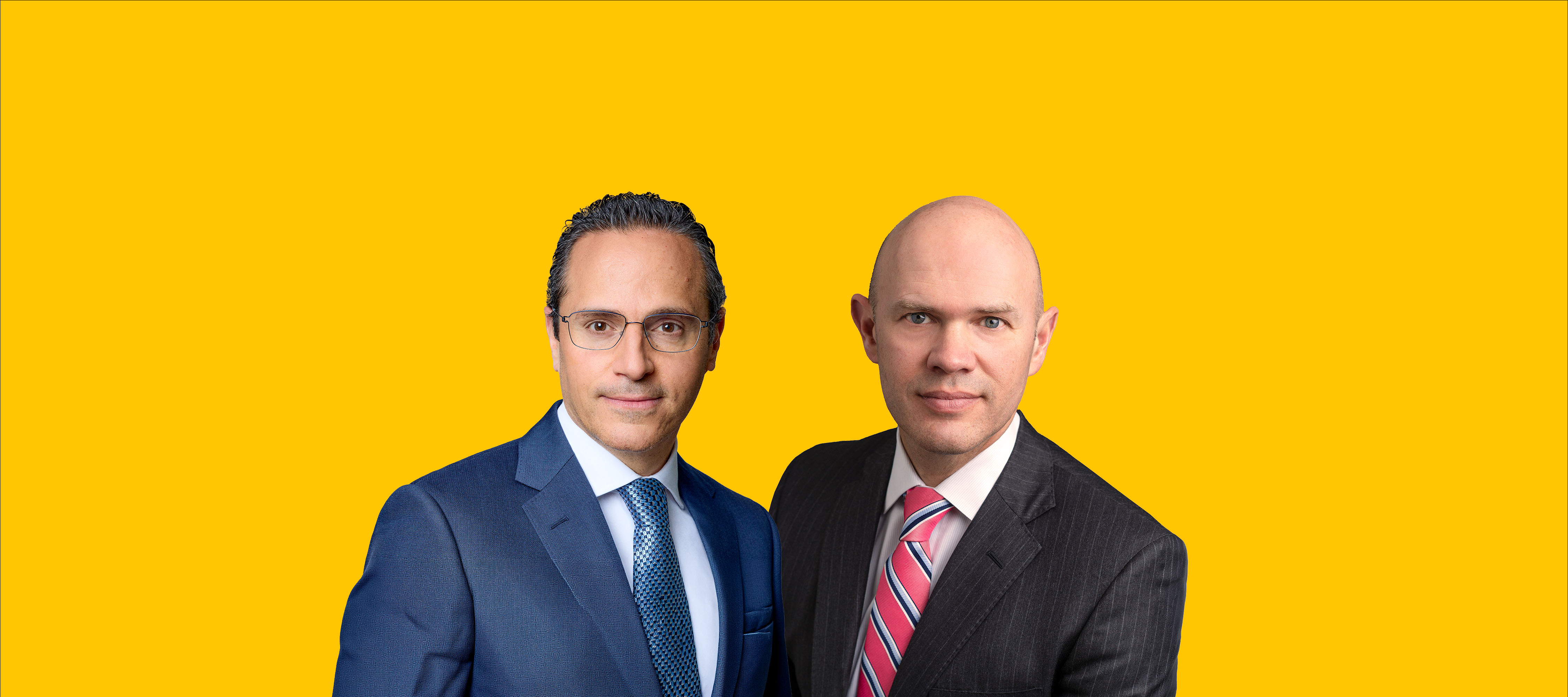
The Long View: Wael Sawan, CEO of Shell
September 2026, In the Spotlight
Overview
In “The Long View,” Eric Veiel, President, Co-head of Global Investments and Chief Investment Officer at T. Rowe Price Associates, welcomes CEOs and industry leaders to share their personal stories, leadership strategies, and lessons learned from running successful companies. The series offers a behind-the-scenes look at what it truly takes to lead in today’s fast-paced and ever-changing business environment.
In this conversation, Wael Sawan, CEO of Shell, joins Eric to discuss his journey to the top of one of the world’s largest energy companies and the strategic priorities he has pursued since taking the helm. He shares his perspective on an increasingly volatile global energy system, why he sees the coming decade as one of “energy addition” rather than substitution, and how Shell is approaching capital allocation, energy security, and resilient, integrated value chains.
Wael also explores the outlook for oil and LNG markets, including the factors that could shape the longer-term price of oil, and discusses how Shell is applying AI across trading, subsurface analysis and decision-making. The conversation also considers leadership, developing talent, learning from mistakes, and balancing the demands of today with the opportunities of the future.
Podcast Host
 Eric L. Veiel, CFA
President, Co-head of Global Investments and CIO
Eric L. Veiel, CFA
President, Co-head of Global Investments and CIO
Speakers
 Wael Sawan
CEO of Shell
Wael Sawan
CEO of Shell“The Angle” Music
Cold OPEN “While a lot of people talk about an energy transition, we're really much more in the space of energy addition, at least for the coming decade. This is an addition game. It is not a substitution game yet.”
Eric Veiel
Welcome back to the Angle from T. Rowe Price, a podcast for curious investors. Just a reminder that outside of the U.S. and Australia, this podcast is for investment professionals only. Today, The Long View comes to you from our London offices, where I’m joined by Wael Sawan, Chief Executive Officer of Shell. We’ll talk about his journey to the top of one of the world’s largest energy companies, the decisions he has made since taking the helm, and how he is navigating the competing demands of energy security, investment, shareholder returns and the energy transition.
Wael, welcome to our London studios.
Wael Sawan
Thank you so much.
Eric Veiel
I'd love to start with kind of your background. You've got a really interesting history. Sort of, born in Beirut just before the civil war and then grew up in Dubai, I believe, and then eventually to Canada. How did all of that sort of global travel as a younger person influence you, as in the professional that you become?
Wael Sawan
Yeah. I mean, I think look, you know, a lot of it was not by choice. A lot of it was, was forced. Whether it was my dad's work, he was an expatriate working at the time for 3M. Or, of course, circumstances in Lebanon, in particular, through the early 80s, when we had tried to come back but barely lasted for a year. And then beyond that, of course, just the career choices I took. I'd say the biggest influences you learn, how to be able to sort of almost blend into different societies and it opened up my mind, and I think I continue to hold that to different people's perspectives. It's really easy coming from a household where, you know, my parents were trying to hold on to our identity with all the moves, to be, to be, static almost in the way you think about things. But all these moves, I think, force you to integrate, to listen, to adapt. And I do think that's one of the, the, things that Lebanese are particularly known for in addition to resilience, it's the ability to adapt where they go. And I've been very lucky in my career to have had multiple, sort of different locations where I get exposed to cultures, to people and to learn from that. I think it's also given me that resilience that I mentioned because every time you move and I see it more now with my kids, you have to build that resilience to be able to set yourself up for the new context that you're in. But I do think it makes us better people.
Eric Veiel
Any of those different locations that really sort of was the most formative for you, or that in some way, you know, added something to your resiliency that that is more than any of the others.
Wael Sawan
I think each one of them brought something specific. I think it was more the events that brought the resiliency, more so than the locations. The, you know, few examples, I mean, I remember distinctly living in the Netherlands when my wife and my son who had just been born. My eldest, was six months at the time, got stuck in the crossfire of Hezbollah and Israel at the time and airports closed. I had to figure out a way to get through into Beirut. There were, you know, getting into a car. Lights had to be off because they were hitting cars at night, and it's those moments where you recognize it puts things into perspective.
Eric Veiel
What really matters
Wael Sawan
What really matters. And it also grounds the relationships with family and what matters to you when you have that extra minute in the day, where do you want to spend it, and who do you want to call up and check on? I think from a professional perspective, resilience came from, you know, tragedies. I had a, I had just been given the opportunity to lead our Kulluk business. It was in 2012. And at the time, a couple of weeks later, we had an industrial accident on one of our facilities and two colleagues died. And I had to sort of face up to the wives and to the kids, if not just those colleagues, but others, to be able to say, if we bring this plant on, can you assure me that everyone's going to be safe? Figuring out as a leader how you are able to look people in the eye and to be able to fulfil what they expect of you and what you demand of yourself. I think those are the moments where, at least I felt, my character was built and where my resilience was developed.
Eric Veiel
Yeah, that's, that's, not the kind of thing they teach you in business school or anything else is how to deal with a situation that personal and that.
Wael Sawan
It’s very difficult. It's very difficult because I think it makes you, it forces you to go back to the core of who you are, and it just pushes you into a space that maybe is the most uncomfortable space, which is how do I get beyond my own fears to be able to make sure that I am there to be the leader that I need to be for the people that are there, and each one of these experiences good, bad and ugly, I think in itself is formative. The most important thing is not to let go of those learnings as we go through, and not to assume that those learnings are static because every single context has a different antidote.
Eric Veiel
Yep. That's a that's an amazing mosaic to build a background on to take over. Then ultimately as, as CEO. So, let's, let's, fast forward to that. It's been a little over three years now, I believe in roll. When you got to Shell as CEO after, you know, been at the company for over 30 years now, but what needed to change in your mind when you took the seat as CEO?
Wael Sawan
Look, I started by really looking at the external context first and then looking at the internal capabilities. We have, the portfolio we had, and how are we going to be able to sort of navigate the years ahead? And what was becoming clear to me, and this was literally just after the Russia/Ukraine, Russia invasion of Ukraine. And what I became more and more convinced of is that the energy system was going one way, and it was going to be more and more volatile in the years to come. And that was not just because of geopolitically induced volatility, but the very fact that it was going to become a much more varied energy system with more nuclear, potentially. We still needed a lot of coal. We still need the oil and gas. We need electricity, everything we can get our hands on. But the intermittency in renewables, for example, the age of the grids and geopolitical uncertainty all meant that volatility was going to be heightened. And so, it convinced me that the core of the company, where we truly had a capability in areas like trading backed by physical infrastructure we needed to be able to not just hold on to, but we needed to hone and to grow and to strengthen. So, there was a choice at that time to really double down, and eventually I pulled up the Head of Trading to sit on my executive committee and really start to bring that to life in our organization.
From an internal perspective, I was lucky to have a lot of good stuff to build on. The values of the company were very strong. We had a good balance sheet, coming in, but there were a few areas where I felt we really needed to sort of sharpen our focus. One was real clarity and simplicity of direction and vision. You know, I remember coming in and I just inventorize the number of targets we had put out there, and there was over 55 targets. We brought that down to a handful and that covered the gamut. We then moved into the second bit, which was, we have a great culture, a culture of care, a culture of support. But we did not have performance edge. So, we really brought the performance, discipline, and simplification mantra into the day-to-day, and we continue to hold on to it. Just stepping up the way we think about performance, not just talking about it, but everything from the cadence around performance, the transparency of data, the ability to have common goals for teams that sit in the matrix, and so on, and so on.
And the third key area I think was capital, and capital allocation, specifically. The industry has been notorious for questionable capital allocation. And I looked back at our own history, and there were many things where I think we just got it wrong. So, we elevated this concept of capital allocation, broadened our mind around it, shifted from what were monthly investment committees to weekly investment committees. Monthly, we used to do two hours. Now we do three hours every single week. We use a lot more AI and data to be able to interrogate track records. What the industry has been able to deliver to really give us the contrarian view on every single one of our investments. We opened our minds from investing in projects to actually, you're competing every single day with my buyback. This is what my buyback can give you right now. And so, just fundamentally shifting the way we think about capital allocation to much more of a shareholder first mindset around it.
Eric Veiel
So maybe use the ARC Resources, recent acquisition, US$16 billion, I believe roughly in total investment there, as the, as the, as the live example of how you all came to that decision that that was the right use of that capital.
Wael Sawan
So, for a long, long time, we struggled to justify doing any acquisition, just because of where our share price was.
Eric Veiel
The buyback just looks so good.
Wael Sawan
It just looked too good. ARC - we had liked a lot strategically, and I'd been looking at ARC for over two and a half years, but we just could not make the numbers work in a way where I could stand up in front of our investors and say, look, this is going to be accretive, and here's how I can I can bank that for you. Fast forward to the opportunity. We were getting ready to make a move, and of course, the events of end of February materialize in the Middle East. And we're like, man, this is going to be tough. What happened next was we found alignment with the ARC board on strategic direction. And at the heart of it, it's our ability to be able to synergize with adjacent blocks that we have, where we are a top performer in gas, UTCs (University Technical Colleges), and gas production with a company that is a leader in liquids production, lowest on the, on the cost on the cost curve. Bring those two assets together. Leverage the fact that we have, of course, our LNG Canada value chain that allows us to monetize that gap through an international market, leverage our trading capacity in the U.S. and in Canada, to be able to also premium(ize) those molecules, and of course, synergize through cost take out. So, a whole bunch of opportunities.
Eric Veiel
That's great. You've referenced the end of February when the U.S. and Israel started bombing in Iran. Super curious what that looks like on the day it happens from your seat. And I'm sure you know, your phones lights up right away. Just take us inside sort of what you do in that moment and maybe just as importantly, what you don't do on a on an event like that.
Wael Sawan
Look, I mean, I think I'm of course, I have massive affinity to the region. My brother lives in Dubai, I've lived in Oman, I've lived in Dubai, I've lived in Qatar. I've worked across the region. Every single minister, every single head of state, I have a personal relationship with, so this was, this was painful. First, on a personal level, as I recognized that many of these countries were going to be caught up in the in the crossfire. So my, my first, my first, act towards colleagues, towards friends, towards family, and towards our own people, was just checking in. And in the days that followed, I had multiple touchpoints with my own teams. I had multiple touchpoints, for example, with some of our seafarers just to check in on them. And, you know, some of them were stuck in the Straits. How are you guys doing? Are you getting what you need? Are the satellite phones working so that you can talk to your families?
The biggest contribution I can make in that moment is to mobilize the capability to be there for our people. But as you say, it's also step back. So, we created very quickly; we have a protocol in the company that goes into crisis team situation. So, I granted the crisis team mandate. My Chief-of-Staff moved in as, as crisis team lead. Under him, there's an entire team that's set up, that includes, for example, scenarios. What could happen? How should we be thinking about that? HR - what do we do with our 2,500 staff who are in the region and another 10,000 dependents there, and so on, and so forth. We, of course, mobilized our intelligence capability that allows us to know what's happening with ships, radars, all of our connects with governments, to be able to make sure that we are one step ahead. And all of that capability gets managed through this crisis team that is on the ball every few hours of the day. My role is just to be able to be there to pick up the phone. Who do you need me to call? What do I need to do? Who do I need to meet? But really, I take my lead from the team rather than become the person who's drawing capability and asking the team for things.
Eric Veiel
Yeah, that's one of those moments. I think that having preplanned for it is just absolutely critical, right. If you don't have that, all those protocols in place ahead of time, trying to come up with them on the spot would be nearly impossible.
Wael Sawan
It's protocol and it's training. And so, we have to we run these simulations on a regular basis. Sadly, over the last few years we've had more actual experiences than we like. But we do this. We do it, for example, for hurricanes in the Gulf of America. We do it for cyberattacks. How would we respond? So, all of that has to be institutionalized so that you are not catching up when, God forbid, something like that happens.
Eric Veiel
Well, and maybe that's a good transition into sort of just the overall global energy landscape and how it's changing. You referenced when you got into the seat, recognizing the volatility was going up, and you certainly capitalize on that in your trading businesses. But how do you think about it structurally for the company? As you think about capital investment, you think about the businesses that you want to build versus maybe those that you want to step back from, maybe put it into context for us, how you're thinking about it from that perspective?
Wael Sawan
I think we, we, start by developing our own view of the energy system. And what we see in the energy system is, while a lot of people talk about an energy transition, we're really much more in the space of energy addition, at least for the coming decade. This is an addition game. It is not a substitution game yet, and so a lot of what we're focused on is what are those energy forms and the parts of the value chains where we have a competitive advantage, where we have a right to win, and that's not everywhere. And we've learned that the hard way over the years. And so, we really focused on those areas. The volatility that I referenced earlier is indeed a feature of that energy system of the future. And embedded within that is a huge level of uncertainty, in particular in the external world. And so, rather than worry about that uncertainty, we try to focus on a few things which we think we can control. One is our own capability, our balance sheet. We focus on the fundamentals. And how does that translate into action? We try to look at resources that are at the lower end of the cost curve. So irrespective of where the world goes, we need to be on the lower end of the cost curve, and where possible on the lower end of the carbon curve, so that we have real resilience in the molecules we have. Beyond that, having a healthy balance sheet in what is a perennially a cyclical industry is wisdom. That doesn't mean you need to have too strong a balance sheet, but it means being really smart about how we are not getting too excited in the good times but building the firepower to play counter cyclically - buybacks or opportunities as they emerge. That's another piece we can control.
I think thirdly, it's about diversification of supplies. Part of uncertainty is I don't know what artery is going to be clogged tomorrow in the, in the global energy trade. I don't know what country is going to impose restrictions on its supplies. We lost a great asset in Russia after the events there, yet the overall system continues to work. So, the diversification of supply sources and infrastructure is key. And I'd say critically, we are deep believers in integrated value chains. That means it's not just about source of supply. It's not just about owning the customer. It's also about owning the artery that connects them. That's shipping.
Eric Veiel
We're seeing that now.
Wael Sawan
So critical. Right. So, we have, we are one of the biggest industrial shippers in the world. We have shipping capability in the organization. When you have control of your own destiny through the terminals, through the pipelines, through the ships, it allows you to be able to move, in particular in times of uncertainty, which plays back to the comment around volatility. So, when we think about capital allocation to the, to the heart of your question, we reflect on that canvas of, okay, so what are the control points that we really need in this bigger picture? We don't need every control point, but we need some critical control points where we need to allocate capital. It could be in the supply. It could be in the infrastructure. It could be in building the consumer part of it. Right. In airports, it is the depots at, for aviation at the airports. So, we can get our aviation fuels to be sold to the airplanes. We don't need the pipeline; that's free access but having the depot in the airport is the control point that allows you to sell to that aviation customer, irrespective of whether they want to buy a sustainable aviation fuel or just jet fuel. That is the value chain thinking, the integrated value chain thinking that we continue to develop and build up because we think that will be very resilient and very value accretive into the future.
Eric Veiel
Liquid natural gas is something that's really important to your, to your company. And it's, it's, been an area that has seen significant volatility; first for the Europeans when we had the Russia/Ukraine; more recently for the Asian customers when we had the issues here. Are you starting to anticipate or think about potentially the customer base that relies on LNG getting more concerned about the volatility of it, and is that causing you to think about more diversification of your portfolio?
Wael Sawan
Yeah. Start off by saying we see great momentum for LNG into the future, largely because it is one of the most versatile energy forms that is able to plug gaps around the world on both the industrial side, as well as the transportation side. There's very few that that pack as much energy content and are able to move across locations like LNG. I think the other thing is what this crisis has shown is, despite the fact that 20% of the globe's LNG is trapped in the Straits, markets haven't gone crazy. And that's partly because of all the new supplies that have come into the market, giving resilience into the future.
Eric Veiel
It's always a difficult question for a CEO of an energy company, but I think you get it a lot. I think you said earlier that you thought oil would be maybe around US$70 a barrel on the other side of, of this crisis, that we're in right now. Is that still your current view, and what are the key assumptions that, that, kind of, go into that perspective?
Wael Sawan
I’ll start by freely admitting that I have never ever gotten the oil price prediction right. I mean, I have been horrendous at it, and that's partly because I think what sits in (the) oil price is so difficult to predict. The geopolitics, the changing nature of the industries that are using our product, and of course, just natural events. As we look into the future, the way we think about oil price is, what is the marginal cost of the barrel that you need to bring into the market to meet the demand at that point. We don't see a fundamental destruction in energy demand at the moment, in particular crude demand. We see maybe two and a half, 3% since the crisis has begun, which is, which is tiny. It's temporal. We don't think it's permanent, so demand isn't hugely changing. The problem is easy oil is behind us, and so you're going to have to continue to find ways to be able to drive engineering options to bring down the cost of oil. But we see that US$70 is a good clearing mark for the demand profile that we see into the future. We'll see whether that view changes.
But what is happening is more and more, I think the cost of a barrel of oil is going up because you're moving from quarter tier one sweet spots in the Permian, to tier two, and eventually into tier three. And we have significantly explored opportunities around the world. So, while there are still lots of barrels to find, we are depleting at the moment on average around 5% a year. And if you think about the shales, it's depleting much faster than that. And so, I do think US$70 plus is a is a fair range to look at. While saying that is too simplistic of a number because it's an average across a period. And what you will find with our commodity is it goes all over the place from US$40, all the way to the US$100. And that's what an investor should be thinking about. It's the cyclicality around the US$70, more so than a singular number.
Eric Veiel
It was, you know, it was sort of revolutionary when the technology came through and fracking that allowed that huge wave of cost incentive improvement. Is there any chance that AI could somehow materially change how oil, how much oil and gas we can recover from existing resource basins?
Wael Sawan
I really hope so. I mean, we are we are seeing early proof points of that but it's still small compared to the numbers we're talking about. So, if you're losing 5 million barrels a day, what you find at the moment is AI is particularly powerful, in particular in the subsurface, in pattern recognition. So, moving from physics-based articulation of opportunities in the reservoir, to a bit more pattern recognition-based opportunities, that typically is more about moving your recovery factor in the reservoir by another 1 or 2%. At some point you hit the challenges of physics and geology, and that becomes much tougher because then your cost structures will go significantly higher.
Eric Veiel
Yeah, right. Maybe just a minute on sort of AI for the company itself, how you think about deploying it internally, what it can do for you, and importantly, what do you think it can't do for your company?
Wael Sawan
Too early to judge what it can’t do and too early to judge its full potential. What we are seeing at the moment is the easy bit of AI is productivity enhancement. The more exciting bit of AI that we have seen of late is in trading, as well as in the subsurface. Those are two areas where we find we are running hard to be able to get our systems to fully leverage the capability. By the way, it's not the technology that we're finding is the issue. It is our workflows. It is our legacy ways of thinking. It is the culture, the behavior. We have, in essence, created workflows that work for people rather than workflows that are able to adapt systems. And so, we're having to work through that at the moment on both the subsurface and the trading. And one area that I've been particularly impressed with, with how we can leverage AI, is in decision making. So, when I go into a meeting now, I have my pre read, I'll go into copilot, I'll put my views coming into the meeting, and I'll say, what am I missing? And I get a great challenge as to look: here are different things you should consider rather than just your current, your current view. So, on a personal level it's helping, but on a corporate level, in upstream, for example, the team has now developed what they call the upstream brain. We take every single bit of data that's coming from the assets, from the sensors, from all of the assurance we are conducting, from all of the reports. We have to be able to really get forensic around what are the areas of focus to be able to enhance performance on an asset, or in a business. That's a step change given the volume of information we are we are trying to digest.
Eric Veiel
So, last month I had Vimal Kapur, the CEO of Honeywell Technologies on, and he was talking a lot about that point right there, which is actually getting the data for big companies, company like Shell, which probably has a lot of different systems in place, and not all of them talk to each other. How much of a challenge has it been just wrangling the data? Because ultimately that seems like a real differentiator. The companies that can, that can harness their own data in a powerful way.
Wael Sawan
Let’s say, the two big differentiators we see getting your data in a good shape early. We've been working on this now for six years, so we have some pockets where we really see the data has moved forward in a big way, and we see the value of that now. But it is essential, because everything else, the technology has never been the issue. It is our discipline and the quality of the data and the harmonization of the way we think about data. So, so, I think that's one critical ingredient of how we need to be able to work on, on this. I think beyond that, when I reflect on our own journey as a company, the systems we have, haven't always spoken to each other, and that is something which I think is, is a real challenge.
Eric Veiel
Is that a legacy of acquisitions, or just one business makes a decision to use a certain technology?
Wael Sawan
Yeah, the latter, because we have empowered businesses to be able to drive their bottom line and given them the levers of control. I think the trick going forward is what is the minimal enterprise architecture that you need that's, that sits over the verticals for each of the businesses. That is going to be key, and that's where our current focus is.
Eric Veiel
Yeah, that's the age-old trade off of decentralization and centralization. And you get there.
Wael Sawan
Which is a human issue as much as it's going to be a data issue.
Eric Veiel
That's actually a great transition. I want to talk a little bit about your leadership philosophy. And I love a quote that that you've said, where you've talked about moving Shell from being an all-knowing culture to an all-learning culture, which I think is just really powerful. Can you give an example of something that maybe you believed three years ago, that now you would say, oh boy, we've learned and, and, and that was wrong.
Wael Sawan
Oh, there's multiple examples. And I think, you know, before the example, I'd started off by recognizing the more I, we as a leadership team talk about our own failings or recognize mistakes we've made, the more we are making it okay for others across the company to do so. And that's hard for a company that is based on a culture of engineering, because engineering, we're taught to get to the right.
Eric Veiel
There's a right answer.
Wael Sawan
Yeah. That's it. Right. If I reflect back on my own journey, you know, I've shared with, with the entire company, I said, look, you know, when I reflect on regrets, I remember spending a lot of time with a core group thinking about our Capital Markets Day 2023, when I first took over, and I launched it into the company with excitement and passion, not recognizing that I hadn't really invested the time in taking the entire company through the dilemmas that we faced. I gave them the answers, but I didn't take the time to pre-event in socializing the challenges. And for folks who had a certain set of beliefs and assumptions, which we had engrained in them over the years, to suddenly shift to a different outcome.
Eric Veiel
Something was wrong. I didn't know anything was wrong. It was great.
Wael Sawan
Going through that, I think has been, or sharing that, has helped others as they reflect on their own journey. I've spoken about as a person. I find that it's very easy for me to move into head rather than heart when I'm in the middle of a crisis, and how I am always trying to find that balance because I find I'm my complete self when I have the two in tandem. But it's so easy to go into intellectual mode. Rational mode. When actually every single decision we make has to have a huge heart component to it. So, I've shared that. I see others in my organization sharing it, and we're trying as much as possible to drive that curiosity. We talk about, hey, don't show me benchmarks that tell me we're doing well. Those don't add any value. The best benchmarks tell us where we have a gap because that allows us to improve. And so, we keep working on that, on ourselves to be able to improve. But, you know, we're moving a culture and it takes time. We just need to keep reinforcing it through the actions we take, not just what we say.
Eric Veiel
How do you. One of the most important things for, for a CEO to do is to develop that next generation of leaders. How do you approach that part of the job? What is your philosophy around developing leaders?
Wael Sawan
You know, we're blessed as a company with some of the systems that have been in place, I'd say for decades, decades, literally. These institutions, these long-serving institutions, I think, recognize the value of time and diverse talent, and we've invested in it. On a personal level, I've been given opportunities in my career where I'd say the majority of opportunities I was given, I did not believe I was up for. I just didn't think I, I had it within me to be able to succeed. And I thought others were much better candidates for those opportunities. And the best leaders have said to me, tough it out, go out there and show me what you can do. And I get that knot in my stomach for three months before I take on the job, and for at least six months after I take on the job because I wanted to prove to those leaders that, okay, you put your trust in me, I will I will be able to demonstrate the returns from it. I've learned that, and I implement it now, pushing my own people into spaces where maybe they don't feel comfortable enough, but then providing the support.
I'm a believer in a people centric leadership model. I learned that playing soccer (football) when I was, when I was young and having to captain my team. Good times or bad times as a leader, it starts with making sure we're there for our people. And so, my, my, own philosophy is, just connect as much as possible, but creating space that's psychologically safe for people to speak up, and then investing in them, investing not in go to these courses, but put them in the line of fire. Bring the dilemmas, bring the challenges, and see how they rise up to the occasion. The best will flourish; some will reach their potential, and others will just, will fall. And our job is to continue to make sure that the best of the best are able to get through the organization, and others are supported to be able to do the best that they can.
Eric Veiel
One of the, one of the unfortunate, but, you know, part of the job of being a CEO I've learned from talking to people in your position is you just have to learn to accept criticism in some, in some ways. When you came into the role, I think you made a very clear statement that you were going to pivot the firm's earlier decisions to really push into renewables, really hard to take a broader perspective, frankly. And now you've interestingly gotten, I think, criticism from both the hard-core renewables folks, and then also the other side as well. How do you process those criticisms and, you know, continue on?
Wael Sawan
It's funny, I've never, ever felt any incremental pressure from that criticism. I've, and maybe this is, you know, the head working in that moment because I've always believed that if you can convince yourself of the fundamentals, if you truly believe deep inside that this is the right thing, and you're upsetting both sides, you must be doing something right.
Eric Veiel
You’re probably doing something right.
Wael Sawan
And so, so what I've tried to do is, is not to ignore the criticism but actually to use it as fuel to challenge my own assumptions. What am I missing? Okay, you're telling me that I'm wrong. Let's talk about it. So, I've, I've, engaged with the NGOs (non-governmental organizations). I've engaged with others, who have said, hey, forget it, just invest in oil, and reached my own conclusion that at the end of the day, I'm not here to appease multiple groups. I'm here to serve the interests of my shareholders and at the heart of it. And I don't mean to share short-term interests; I have to be able to steward this company and hand it over for shareholders who need to see the benefits and the growth over decades. And so, that that is my core group, and so what I need to be able to do, is to then develop the strategy that supports that, a much more balanced strategy that delivers today, while at the same time building the optionality and the, and the growth for the future. And yes, there will be many who are who are unhappy with it. Hopefully our performance does the talking and people recognize that we're trying to do the right thing.
Eric Veiel
That's great. So, one of the things that's really important when you have these important jobs and the stress that comes on, then it's finding a way to maintain some kind of a work-life balance to stay healthy physically, mentally. What do you do, to, to, try to keep that and keep that focus?
Wael Sawan
I love sports, so I try to get into the gym every single day. I have a small gym at home. I have three young boys; young boys, 21 now, 18, and 15. I loved, loved soccer. That was my game. And over time, as the limbs started to sort of give way and the back started to be more, and I recognized right now that that the only way to get time with them is to be in the gym with them. I sort of shifted towards that. It really gives me peace of mind. I love watching sports.
Eric Veiel
Did you make it over to the U.S. or Canada or Mexico for the World Cup?
Wael Sawan
I didn’t this year. I went to Qatar last time round. We love. The four boys at home; my wife doesn't love it particularly, but the four boys love the NFL; we’re New Orleans Saints fan. So.
Eric Veiel
Okay, so you spent some time in New Orleans, right?
Wael Sawan
One year, and that was the formative year for my boys when they got; they never heard about the NFL. So, I took them to watch every single game. And, and, of course, New Orleans breathes LSU and Saints.
Eric Veiel
It's a passionate fan base.
Wael Sawan
And so they loved it. And it became it became our thing. And so, there are those moments that, you know, I find give me a lot of relaxation. Just spending time with the family in whatever it is that we're doing at that moment in time, getting my sports done. We travel every once in a while. But, I've found that it's really the quality of the time I spend. I can, I can compartmentalize, I turn off, sometimes I just focus on the on the kids when we're having dinner, or with my wife when we're going out for, for a date. And we just have to be able to move on. Otherwise, this marathon that we're on as CEOs, you know, you start to run out of stamina. And we're in this for the long game, not for the short one.
Eric Veiel
Well, if you consider now, you have a standing invitation for a Ravens game. Okay. We like to end these with what we call our rapid-fire questions. So, I'm going to, I'm going to throw a couple of quick questions at you. And just one, two three, four-word answers. And we're going to go through them. They're going to be from work to fun. Okay, okay, so you've said that pessimism is irresponsible. What makes you optimistic today?
Wael Sawan
People and technology.
Eric Veiel
If you could eliminate one thing from the CEO's calendar, what would it be?
Wael Sawan
Big meetings.
Eric Veiel
What quality do you most value in the people who work for you?
Wael Sawan
Honesty.
Eric Veiel
Finish this sentence. The future of energy is…
Wael Sawan
Unlimited.
Eric Veiel
Are you an early bird or a night owl?
Wael Sawan
Early bird.
Eric Veiel
What's the first thing you do when you wake up?
Wael Sawan
Read.
Eric Veiel
What's something you're surprisingly competitive about?
Wael Sawan
Everything.
Eric Veiel
Okay, last one. If you suddenly had an entire Saturday free, what would you do?
Wael Sawan
Sports. Sports, and a bit more sports.
Eric Veiel
That's excellent. Wael, thank you so much. This has been great. Thanks for coming in.
Wael Sawan
Lovely to meet you. Thank you very much for having me.
Eric Veiel
Thank you.
Eric Veiel
Again, I'm Eric Veiel. Thank you for listening to The Angle. We look forward to your company on future episodes. You can find more information about this and other topics on our website. Please rate and subscribe wherever you get your podcasts. The Angle. Better questions, better insights. Only from T. Rowe Price.
DISCLOSURE
This podcast episode was recorded in September of 2026 and is for general information and educational purposes only. Outside of the United States and Australia it is for investment professional use only. It is not intended to be used by persons in jurisdictions which prohibit or restrict distribution of the material herein.
This podcast does not give advice or recommendations of any nature; or constitute an offer or solicitation to buy or sell any security in any jurisdiction. Prospective investors should seek independent legal, financial, and tax advice before making any investment decision. Past performance is not a guarantee or a reliable indicator of future results. All investments are subject to risk, including the possible loss of principal.
Discussions relating to specific securities are informational only, and are not recommendations, and may or may not have been held in any T. Rowe Price portfolio. There should be no assumption that the securities were or will be profitable. T. Rowe Price is not affiliated with, or a subsidiary of, any company discussed.
The views contained herein, including forecasts and forward-looking statements, are of the speakers as of the date of the recording and are subject to change without notice. Actual future outcomes may differ, perhaps materially, from any forecasts or forward-looking statements provided. The views expressed may differ from those of other T. Rowe Price associates and/or affiliates. Information is from sources deemed reliable but not guaranteed. Please visit https://www.troweprice.com/en/uk/insights/the-long-view-shell for full global issuer disclosures. This podcast is copyright by T. Rowe Price, 2026.
CON01620568
2026209 - 5924346
Subscribe to never miss an episode
Glossary
In oil and gas exploration and production (especially shale acreage), tiers refer to the quality and profitability potential of the reservoir rock.
- Tier 1: Premium-quality acreage with the best geological characteristics (highest oil/gas concentration, ideal rock thickness and permeability), making it the most profitable and easiest to extract.
- Tier 2: Moderate-quality acreage where rock properties are decent, but production costs or output rates are slightly less favorable than Tier 1.
- Tier 3: Lower-quality or marginal acreage where the rock is less responsive to fracturing or contains fewer resources, requiring higher investments for lower returns.
In a reservoir, the recovery factor in terms of energy measures how efficiently the reservoir's natural or added energy can push stored resources (like oil, gas, or heat) out to the surface.
Important Information
Outside of the United States and Australia, this is intended for investment professional use only. Not for further distribution.
This material is being furnished for informational and/or marketing purposes only and does not constitute an offer, recommendation, advice, or solicitation to sell or buy any security.
Prospective investors should seek independent legal, financial and tax advice before making any investment decision.
Past performance is not a guarantee or a reliable indicator of future results. All investments involve risk, including possible loss of principal.
Discussions relating to specific securities are informational only, are not recommendations, and may or may not have been held in any T. Rowe Price portfolio. There should be no assumption that the securities were or will be profitable. T. Rowe Price is not affiliated with, or a subsidiary of, any company discussed. Some T. Rowe Price portfolios are passively invested in Shell.
The views contained herein are those of the author(s), are as of September 2026 are subject to change, and may differ from the views of other T. Rowe Price Group companies and/or associates. Under no circumstances should the material, in whole or in part, be copied or redistributed without consent from T. Rowe Price.
The podcast does not give advice or recommendations of any nature; or constitute an offer or solicitation to sell or buy any security in any jurisdiction. Prospective investors should seek independent legal, financial, and tax advice before making any investment decision. Past performance is not a reliable indicator of future performance. All investments are subject to risk, including the possible loss of principal.
The views contained herein, including forecasts and forward-looking statements, are of the speakers as of the date of the recording and are subject to change without notice. Actual future outcomes may differ, perhaps materially, from any forecasts or forward-looking statements provided. The views expressed may differ from those of other T. Rowe Price associates and/or affiliates. Information is from sources deemed reliable but not guaranteed
Australia—Issued by T. Rowe Price Australia Limited (ABN: 13 620 668 895 and AFSL: 503741), Level 28, Governor Phillip Tower, 1 Farrer Place, Sydney NSW 2000, Australia.
Canada— Issued in Canada by T. Rowe Price (Canada), Inc. T. Rowe Price (Canada), Inc.’s investment management services are only available to non-individual Accredited Investors and non-individual Permitted Clients as defined under National Instrument 45-106 and National Instrument 31-103, respectively. T. Rowe Price (Canada), Inc. enters into written delegation agreements with affiliates to provide investment management services.
EEA—Unless indicated otherwise this material is issued and approved by T. Rowe Price (Luxembourg) Management S.à r. l. 35 Boulevard du Prince Henri L-1724 Luxembourg which is authorised and regulated by the Luxembourg Commission de Surveillance du Secteur Financier. For Professional Clients only.
New Zealand—Issued by T. Rowe Price Australia Limited (ABN: 13 620 668 895 and AFSL: 503741), Level 28, Governor Phillip Tower, 1 Farrer Place, Sydney NSW 2000, Australia. No Interests are offered to the public. Accordingly, the Interests may not, directly or indirectly, be offered, sold or delivered in New Zealand, nor may any offering document or advertisement in relation to any offer of the Interests be distributed in New Zealand, other than in circumstances where there is no contravention of the Financial Markets Conduct Act 2013.
Singapore—Issued by T. Rowe Price Singapore Private Ltd. (UEN: 201021137E), 501 Orchard Rd, #10-02 Wheelock Place, Singapore 238880. T. Rowe Price Singapore Private Ltd. is licensed and regulated by the Monetary Authority of Singapore. For Institutional and Accredited Investors only.
Switzerland—Issued in Switzerland by T. Rowe Price (Switzerland) GmbH, Talstrasse 65, 6th Floor, 8001 Zurich, Switzerland. For Qualified Investors only.
UK—This material is issued and approved by T. Rowe Price International Ltd, Warwick Court, 5 Paternoster Square, London EC4M 7DX which is authorised and regulated by the UK Financial Conduct Authority. For Professional Clients only.
© 2026 T. Rowe Price. All Rights Reserved. T. ROWE PRICE, INVEST WITH CONFIDENCE, the Bighorn Sheep design and related indicators (see troweprice.com/ip) are trademarks of T. Rowe Price Group, Inc. All other trademarks are the property of their respective owners. Use does not imply endorsement, sponsorship, or affiliation of T. Rowe Price with any of the trademark owners.
202609- 5924417